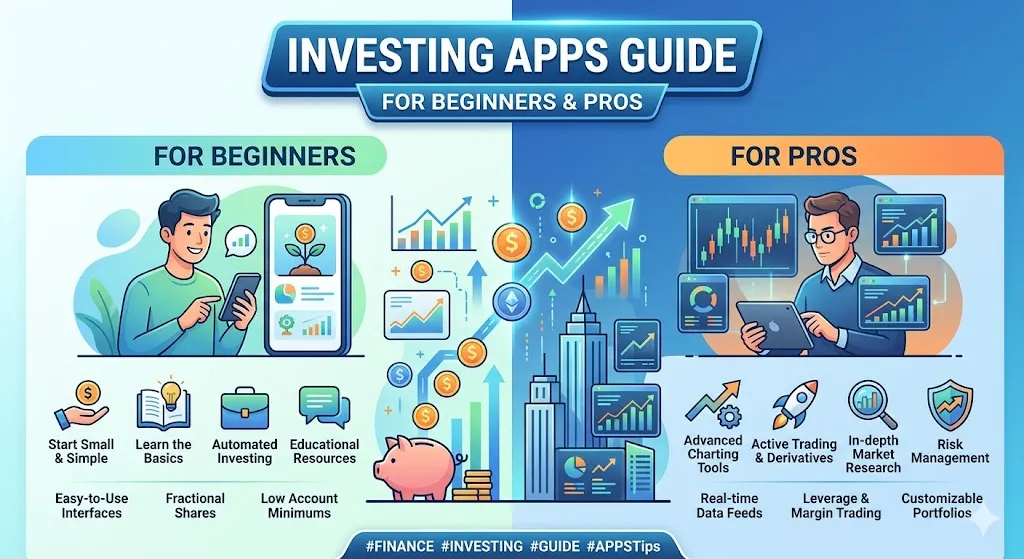

Robo investing has become one of the easiest entry points for new investors in the U.S. Instead of selecting individual stocks or managing complex portfolios, robo advisors use automated systems to build and maintain diversified investment portfolios based on a person’s goals, timeline, and risk tolerance.
For beginners, the appeal is straightforward. Lower costs, automation, and simplified investing can remove much of the intimidation that comes with getting started.
What Is Robo Investing

Robo investing refers to automated investment management through digital platforms known as robo advisors.
After answering questions about:
- Financial goals
- Risk tolerance
- Investment timeline
- Income and savings
the platform builds a portfolio, usually using ETFs and diversified index funds.
Many robo advisors also automatically:
- Rebalance portfolios
- Reinvest dividends
- Adjust allocations over time
- Offer tax optimization features
The process is designed to reduce complexity for investors who do not want to manage investments manually.
Why Beginners Choose Robo Advisors
New investors often struggle with one major question:
Where do I even start?
Robo advisors simplify that decision-making process by offering structured portfolios without requiring deep market knowledge.
Common reasons beginners choose robo investing include:
- Low minimum investment requirements
- Automatic diversification
- Reduced emotional investing
- Lower management fees compared to some traditional advisors
- Easy-to-use mobile platforms
For many people, consistency matters more than trying to outperform the market immediately.
Popular Robo Investing Platforms
Several robo advisors dominate the U.S. market because of their ease of use, low fees, and broad accessibility.
Betterment
Known for beginner-friendly tools, automatic rebalancing, and goal-based investing features.
Wealthfront
Popular for automation, tax-loss harvesting, and financial planning tools integrated into the platform.
Fidelity Go
Appeals to investors who prefer established financial institutions with automated investing support.
Schwab Intelligent Portfolios
Offers diversified portfolios with no advisory fee, though cash allocation structures vary.
SoFi Automated Investing
Frequently chosen by newer investors looking for simple account setup and integrated financial services.
Robo Investing Compared With Self-Directed Investing
| Factor | Robo Investing | Self-Directed Investing |
|---|---|---|
| Portfolio Management | Automated | Manual |
| Research Requirement | Low | Higher |
| Emotional Decision Risk | Lower | Higher |
| Customization | Moderate | High |
| Time Commitment | Minimal | Ongoing |
Some investors eventually transition from robo investing to self-directed investing. Others continue using robo advisors for years because they prefer simplicity and automation.
Understanding Risk in Robo Investing
Robo investing is still investing.
That means market losses are possible.
Even diversified portfolios can decline during major market downturns. A conservative portfolio may reduce volatility, but it cannot remove risk entirely.
Most robo advisors offer portfolio options ranging from:
- Conservative
- Moderate
- Aggressive growth
The appropriate level depends on:
- Time horizon
- Financial goals
- Comfort with volatility
- Emergency savings
- Income stability
Long-term investors generally focus more on consistency than short-term performance swings.

Pro Insight
One overlooked advantage of robo investing is behavioral discipline. Many beginner investors damage long-term performance by reacting emotionally during market volatility.
Automated investing can help reduce impulsive decisions by creating a structured, long-term process that continues regardless of short-term headlines.
Quick Tip
Before opening a robo investing account, review the platform’s total fees carefully. Advisory fees may appear small, but ETF expense ratios and account features can still affect long-term returns over time.
Real-World Micro Scenario
A new investor opens a robo investing account with a modest monthly contribution. Instead of trying to pick individual stocks, the platform automatically spreads investments across diversified ETFs covering U.S. stocks, international markets, and bonds.
During periods of market volatility, the investor continues contributing consistently rather than stopping after short-term declines. Over time, the automated structure helps maintain discipline without constant portfolio adjustments.
When Robo Investing Makes the Most Sense
Robo investing is often well-suited for:
- Beginner investors
- Busy professionals
- Long-term retirement savers
- Investors uncomfortable selecting stocks
- People seeking automation and simplicity
It may be less suitable for:
- Active traders
- Highly customized investing strategies
- Investors wanting direct control over every holding
- Specialized options or complex tax strategies
The goal is convenience and consistency, not aggressive speculation.
Common Beginner Mistakes to Avoid
Some common mistakes include:
- Choosing aggressive risk levels too quickly
- Expecting fast profits
- Ignoring emergency savings first
- Comparing short-term performance constantly
- Stopping contributions during market downturns
- Overlooking fees and account structures
Patience is often more important than frequent changes
Frequently Asked Questions
What is beginner robo investing
Beginner robo investing uses automated platforms to manage diversified investment portfolios with minimal manual involvement.
Are robo advisors safe to use
Major robo advisors generally use regulated brokerage structures and security protections, though investment losses are still possible.
How much money do I need to start
Some robo advisors allow accounts with very low minimum deposits or no minimum requirement at all.
Can robo advisors lose money
Yes. Portfolio values can decline when financial markets fall.
Is robo investing good for retirement
Many investors use robo advisors for long-term retirement goals because of automation and diversification features.
Conclusion

Beginner robo investing offers a practical way to enter the investment world without managing every detail manually. Automated diversification, consistent contributions, and simplified portfolio management can help new investors build long-term habits with less emotional pressure.
Still, robo investing works best when paired with realistic expectations, steady contributions, and patience during market fluctuations.
https://www.investor.gov
https://www.sec.gov
https://www.finra.org
https://www.consumerfinance.gov
This article is for general informational purposes only and does not provide legal, financial, medical, or professional advice. Policies, rates, and regulations may change over time.
#roboinvesting, #beginnerinvesting, #roboadvisor, #longterminvesting, #personalfinance