

Automated investing has changed how people build wealth by removing much of the day-to-day decision-making. Instead of actively picking stocks or timing the market, investors can rely on technology to manage portfolios based on predefined goals.
For beginners and busy professionals alike, this approach offers a structured way to stay consistent without constant oversight.
What Is Automated Investing
Automated investing is a method of managing investments using algorithms and software rather than manual decision-making. It typically involves setting goals, choosing a risk level, and letting a platform handle portfolio allocation and maintenance.

Most automated investing platforms—often called robo advisors—handle:
- Portfolio construction
- Asset allocation
- Automatic rebalancing
- Dividend reinvestment
This allows investors to stay invested without reacting to short-term market noise.
How Automated Investing Works
The process begins with a short questionnaire designed to understand your financial situation and goals.
From there:
- A diversified portfolio is created, often using low-cost funds
- The system monitors and adjusts allocations over time
- Investments are rebalanced periodically to maintain target risk levels
The goal is to keep your portfolio aligned with long-term objectives rather than short-term trends.
Automated Investing vs Manual Investing
| Feature | Automated Investing | Manual Investing |
|---|---|---|
| Decision Making | Algorithm-driven | Investor-driven |
| Time Commitment | Low | High |
| Cost | Typically lower | Can be higher |
| Emotional Influence | Minimal | Higher |
| Customization | Moderate | High |
Each approach has its place, but automated investing is often preferred for simplicity and consistency.
Pro Insight
Consistency is one of the biggest advantages of automated investing. By removing emotional reactions—like panic selling or overbuying—investors often maintain a steadier long-term strategy.
Key Benefits of Automated Investing
Automated investing appeals to a wide range of investors for several reasons:
- Simplifies portfolio management
- Encourages disciplined, long-term investing
- Reduces emotional decision-making
- Offers relatively low fees compared to traditional advisory services
These benefits make it especially attractive for those new to investing.
Risks and Limitations
Despite its convenience, automated investing is not without limitations.
- Limited personalization for complex financial situations
- Dependence on algorithm-based decisions
- Less flexibility for short-term strategies
- Market risk still applies
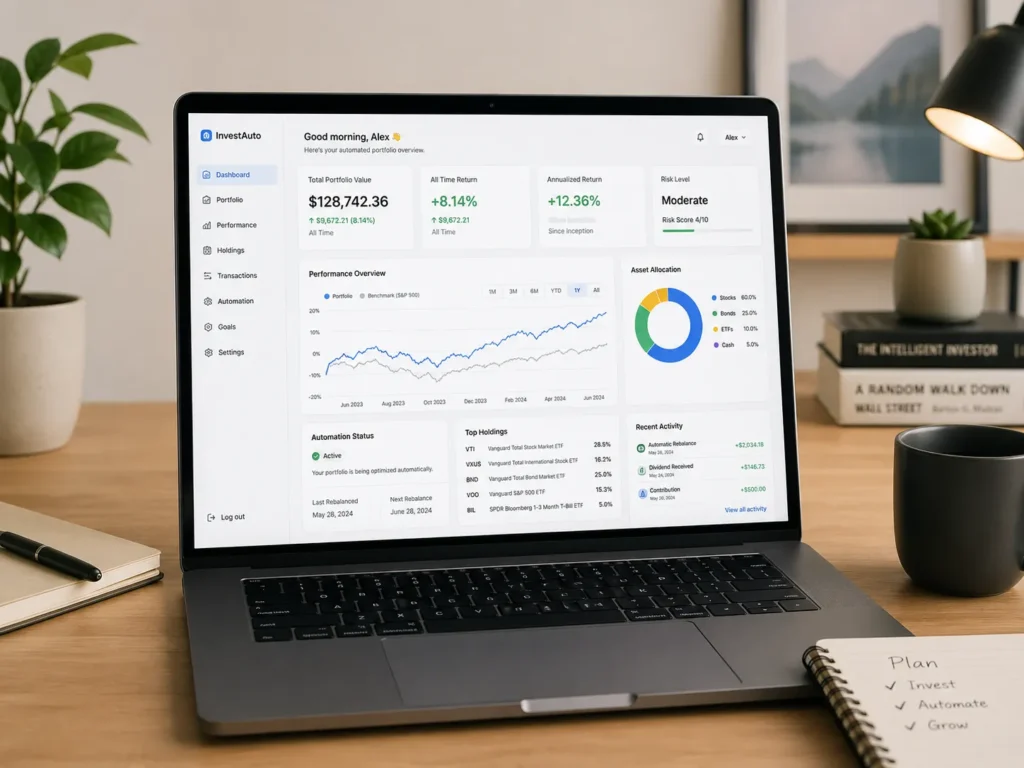
Investors should understand that automation does not eliminate risk—it simply manages it differently.
Quick Tip
Start with a platform that allows small initial investments. This lets you get comfortable with automated investing before committing larger amounts.
When Automated Investing Makes Sense
This approach works well in several scenarios:
- Long-term wealth building
- Retirement planning
- Investors with limited time or experience
- Those seeking a passive investment strategy
A simple example illustrates this.
An individual sets up automatic monthly contributions into an automated portfolio. Over time, the system rebalances investments and reinvests earnings, creating a steady, hands-off growth approach.
Common Features to Look For
Not all automated investing platforms are identical. Key features to consider include:
- Low management fees
- Automatic rebalancing
- Tax-efficient strategies
- User-friendly interface
Choosing the right platform depends on your financial goals and comfort level.

Frequently Asked Questions
What is automated investing
It is a method of investing where software manages your portfolio based on your goals and risk tolerance.
Is automated investing safe
It follows standard investment practices, but all investments carry market risk.
How much money do I need to start
Many platforms allow low or no minimum investment, making it accessible to beginners.
Can automated investing beat the market
Most systems aim to match market performance through diversified strategies rather than outperform it.
Who should use automated investing
It is ideal for beginners, busy professionals, and long-term investors seeking a passive approach.
Conclusion
Automated investing provides a practical way to build and manage a portfolio without constant involvement. By combining technology with disciplined strategies, it helps investors stay consistent and focused on long-term goals.
While it may not suit every situation, it offers a strong foundation for those looking to simplify the investing process.
https://www.sec.gov
https://www.investor.gov
https://www.finra.org
https://www.federalreserve.gov
This article is for general informational purposes only and does not provide legal, financial, medical, or professional advice. Policies, rates, and regulations may change over time.