


Portfolio rebalancing is a core investment practice that helps keep your asset allocation aligned with your goals over time. As markets move, your original mix of stocks, bonds, and other assets can drift—sometimes significantly.
Rebalancing brings that mix back to your intended strategy, helping manage risk without requiring constant trading.
What Is Portfolio Rebalancing
Portfolio rebalancing is the process of adjusting your investments to maintain a target allocation. For example, if your goal is 60% stocks and 40% bonds, market changes may shift that balance.

Over time, one asset class may outperform others, causing your portfolio to become unbalanced. Rebalancing corrects this by buying or selling assets as needed.
How Portfolio Rebalancing Works
The process is straightforward but important:
- Review your current asset allocation
- Compare it to your target allocation
- Sell assets that exceed target levels
- Buy assets that fall below target levels
This keeps your investment strategy consistent with your risk tolerance.
Rebalancing vs No Rebalancing
| Feature | Rebalanced Portfolio | Unbalanced Portfolio |
|---|---|---|
| Risk Level | Controlled | Can drift higher or lower |
| Asset Allocation | Maintained | Changes over time |
| Discipline | Structured | Reactive |
| Long-Term Consistency | Higher | Less predictable |
| Emotional Influence | Reduced | Increased |
Without rebalancing, portfolios can gradually move away from their intended risk profile.
Pro Insight
Rebalancing is not about maximizing returns—it’s about maintaining the right level of risk. Over time, this discipline can help create more stable outcomes.
Common Rebalancing Methods
There are several ways to approach rebalancing.
- Time-based rebalancing
Adjust your portfolio at regular intervals, such as quarterly or annually - Threshold-based rebalancing
Rebalance when an asset class moves beyond a set percentage from its target - Combination approach
Use both time intervals and thresholds for flexibility
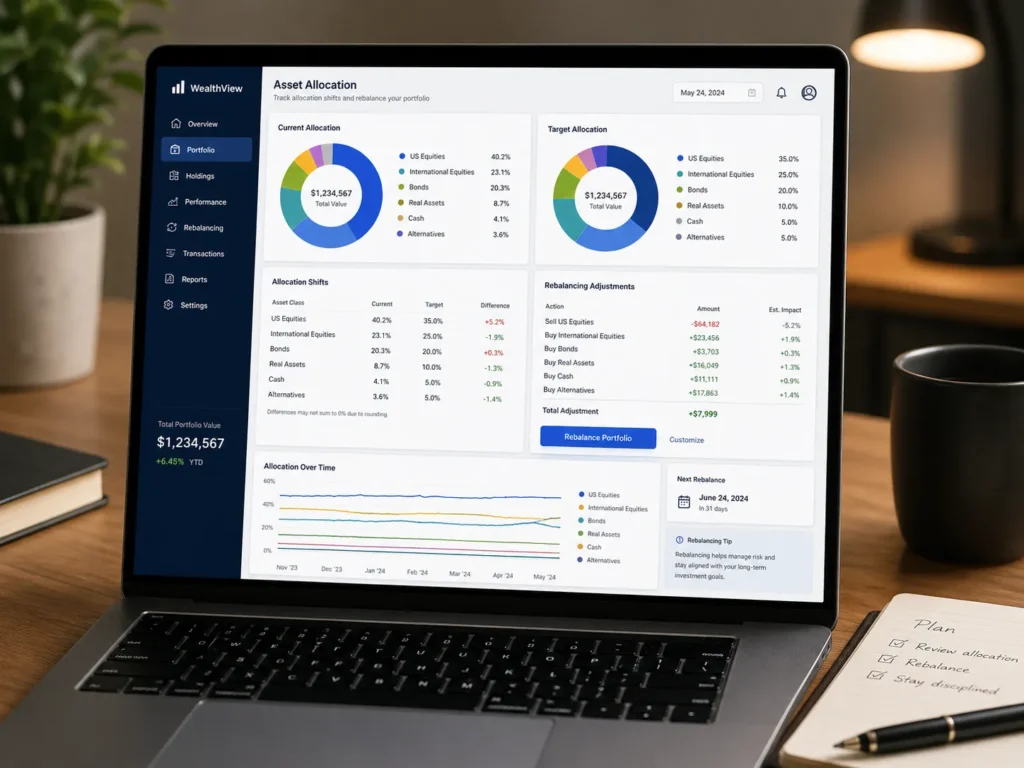
Each method has its advantages, depending on your investment style.
Quick Tip
Avoid rebalancing too frequently. Excessive adjustments can increase costs and reduce overall efficiency without adding meaningful benefit.
Why Rebalancing Matters
Rebalancing plays a key role in long-term investing by:
- Maintaining your intended risk level
- Preventing overexposure to a single asset class
- Encouraging disciplined decision-making
- Supporting consistent investment strategy
It helps ensure that your portfolio reflects your goals—not just market movements.
Real World Example
Imagine a portfolio originally set at:
- 60% stocks
- 40% bonds
After a strong stock market rally, the allocation shifts to:
- 75% stocks
- 25% bonds
Without rebalancing, the portfolio now carries more risk than intended. By selling some stocks and buying bonds, the original balance is restored.
Costs and Considerations
While rebalancing is important, it comes with considerations:
- Transaction costs
- Potential tax implications in taxable accounts
- Timing decisions
Being mindful of these factors helps maintain efficiency.

Frequently Asked Questions
What is portfolio rebalancing
It is the process of adjusting investments to maintain a target asset allocation.
How often should I rebalance my portfolio
Many investors rebalance annually or when allocations shift beyond a set threshold.
Does rebalancing improve returns
It mainly helps manage risk and maintain consistency rather than directly increasing returns.
Can I rebalance automatically
Yes, many investment platforms offer automatic rebalancing features.
Is rebalancing necessary for all investors
It is generally recommended for anyone with a diversified portfolio and long-term goals.
Conclusion
Portfolio rebalancing is a simple but powerful tool for maintaining investment discipline. By keeping your asset allocation aligned with your goals, it helps manage risk and supports long-term stability.
Rather than reacting to market swings, rebalancing allows you to stay focused on your strategy—one adjustment at a time.
https://www.sec.gov
https://www.investor.gov
https://www.finra.org
https://www.federalreserve.gov
This article is for general informational purposes only and does not provide legal, financial, medical, or professional advice. Policies, rates, and regulations may change over time.