

Investing apps have made it easier than ever to start building a portfolio directly from your phone. Whether you want to trade stocks, invest passively, or explore crypto, the right app can simplify the entire process.
The best choice depends on your goals—ease of use, fees, investment types, and automation features are the most important factors to consider.
What Are Investing Apps
Investing apps are mobile platforms that allow users to buy, sell, and manage investments such as stocks, ETFs, or crypto from anywhere.
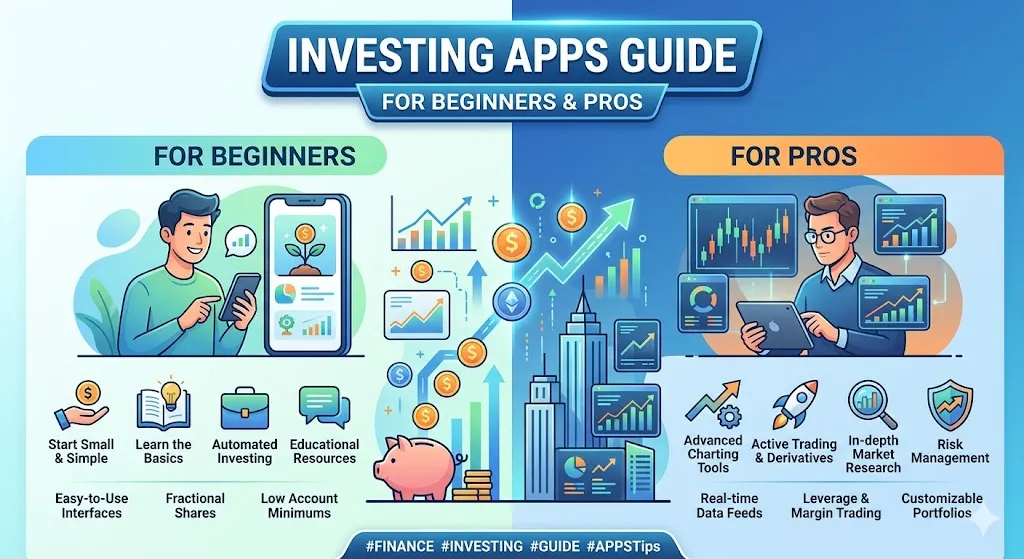
Many apps now combine multiple features:
- Real-time market tracking
- Portfolio management tools
- Automated investing (robo-advisors)
- Educational resources
Apps like Investing.com app provide real-time data and portfolio tracking across global markets (Google Play).
Best Investing Apps by Use Case
Different apps are designed for different types of investors.
Beginner-Friendly Apps
These apps focus on simplicity and education.
- Robinhood
- Fidelity Investments app
- Charles Schwab app
They offer easy interfaces and access to stocks and ETFs, making them ideal for first-time investors (Bankrate).
Robo Advisor Apps
Best for hands-off investing.
- Betterment
- Wealthfront
These apps automatically build and rebalance portfolios based on your goals.

Multi Asset Apps
For users who want everything in one place.
- Pluang
- eToro
Apps like Pluang allow investing in stocks, crypto, and commodities within a single platform (Pluang).
Investing Apps Comparison
| Feature | Beginner Apps | Robo Advisors | Multi Asset Apps |
|---|---|---|---|
| Ease of Use | Very high | High | Moderate |
| Automation | Low | High | Moderate |
| Investment Options | Stocks, ETFs | Managed portfolios | Stocks, crypto, more |
| Time Required | Moderate | Low | Moderate |
| Best For | Learning | Passive investing | Flexibility |
Pro Insight
The “best” investing app depends on your behavior. If you check markets daily, a trading app fits better. If you prefer hands-off growth, robo advisors often lead to more consistent outcomes.
Key Features to Look For
When choosing an investing app, focus on:
- Low fees or commission-free trading
- User-friendly interface
- Portfolio tracking tools
- Security and regulation
Some apps also offer fractional investing, allowing you to buy small portions of expensive stocks.
Quick Tip
Start with one simple app. Using too many platforms early can make your portfolio harder to manage and track.
Real World Scenario
A beginner investor downloads a simple investing app and starts with small monthly contributions.
Over time:
- They learn market basics
- Build a diversified portfolio
- Gradually move to more advanced tools
This step-by-step approach is more sustainable than jumping into complex trading immediately.
Common Mistakes to Avoid
- Choosing apps based only on hype
- Ignoring fees and hidden costs
- Overtrading due to easy access
- Using advanced features too early
Apps make investing easier—but discipline still matters.

Frequently Asked Questions
What is the best investing app for beginners
Apps like Robinhood, Fidelity, and Schwab are often recommended due to ease of use and educational tools.
Are investing apps safe
Most are safe if regulated, but always check security features and account protection.
Can I start investing with little money
Yes, many apps allow fractional investing and low minimum deposits.
Do investing apps charge fees
Some are commission-free, but may still charge spreads or management fees.
Should I use multiple investing apps
It’s better to start with one platform and expand only when needed.
Conclusion
Investing apps have lowered the barrier to entry for building wealth. Whether you prefer active trading or passive investing, there’s an app designed to match your style.
The key is choosing a platform that aligns with your goals, staying consistent, and focusing on long-term growth rather than short-term trends.
https://www.sec.gov
https://www.investor.gov
https://www.finra.org
https://www.federalreserve.gov
This article is for general informational purposes only and does not provide legal, financial, medical, or professional advice. Policies, rates, and regulations may change over time.