


Digital wealth management has reshaped how individuals plan, invest, and grow their assets. By combining technology with financial strategy, it offers a more accessible and streamlined approach to managing wealth—without the traditional barriers of high fees or in-person meetings.
For today’s investors, it represents a shift toward convenience, transparency, and data-driven decision-making.
What Is Digital Wealth Management
Digital wealth management refers to the use of online platforms and software to manage investments, financial planning, and portfolio strategies. These platforms often combine automation with optional human guidance.
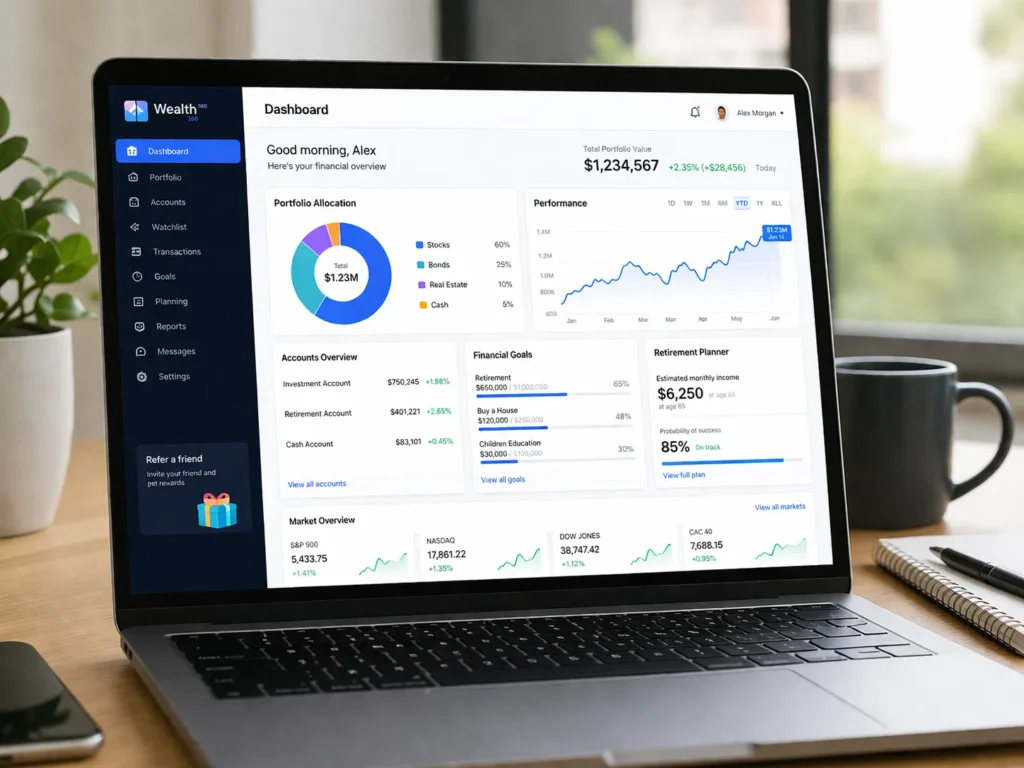
Common features include:
- Automated portfolio management
- Goal-based financial planning
- Real-time performance tracking
- Tax-efficient investment strategies
Some platforms operate entirely digitally, while others offer hybrid models with access to financial advisors.
How Digital Wealth Management Works
The process typically begins with a digital onboarding experience where users provide information about their financial goals, income, and risk tolerance.
From there:
- A portfolio is created using diversified assets
- Algorithms manage allocation and rebalancing
- Performance is tracked through dashboards
- Adjustments are made based on market conditions or life changes
This structure allows investors to stay aligned with long-term objectives while minimizing manual effort.
Digital Wealth Management vs Traditional Advisory
| Feature | Digital Wealth Management | Traditional Advisory |
|---|---|---|
| Access | Online platforms | In-person meetings |
| Cost | Generally lower | Higher |
| Portfolio Management | Automated or hybrid | Human-driven |
| Availability | 24/7 access | Limited to office hours |
| Personalization | Moderate | Highly customized |
Both approaches can be effective, depending on the complexity of your financial needs.
Pro Insight
Digital platforms are most effective when paired with clear financial goals. Without defined objectives, even the best tools can produce unfocused results.
Key Benefits of Digital Wealth Management
This approach has gained popularity for several practical reasons:
- Lower fees compared to traditional advisory services
- Easy account setup and management
- Continuous portfolio monitoring
- Access to data-driven insights
These benefits make it appealing to both new investors and those looking to simplify existing strategies.
Limitations to Consider
Despite its advantages, digital wealth management has some constraints:
- Limited human interaction in fully automated platforms
- Less flexibility for complex financial situations
- Dependence on algorithm-based decisions
- Potential learning curve for new users

Understanding these limitations helps set realistic expectations.
Quick Tip
Choose a platform that offers hybrid support if you anticipate needing guidance in the future. This gives you flexibility without sacrificing convenience.
When Digital Wealth Management Makes Sense
Digital wealth management is particularly useful in the following scenarios:
- Long-term investing and retirement planning
- Investors seeking a hands-off approach
- Individuals comfortable using financial technology
- Those looking to reduce management fees
Consider a simple example.
An investor sets up a digital platform to manage monthly contributions. Over time, the system automatically rebalances the portfolio and adjusts allocations, allowing steady progress without constant intervention.
Common Features to Look For
Not all platforms are the same. Key features often include:
- Automated rebalancing
- Tax optimization strategies
- Goal tracking tools
- User-friendly dashboards
Selecting the right combination depends on your priorities and level of involvement.

Frequently Asked Questions
What is digital wealth management
It is the use of online platforms and technology to manage investments and financial planning.
Is digital wealth management safe
Most platforms follow industry security standards, but investments still carry market risk.
How much does digital wealth management cost
Fees are generally lower than traditional advisors, often based on a percentage of assets managed.
Can beginners use digital wealth management
Yes, many platforms are designed to be user-friendly and accessible for new investors.
Does digital wealth management replace financial advisors
It can in some cases, but hybrid models combine automation with human advice for more complex needs.
Conclusion
Digital wealth management offers a modern, efficient way to approach investing and financial planning. By combining automation with structured strategies, it simplifies many aspects of portfolio management while keeping costs relatively low.
For investors looking to balance convenience with long-term growth, it provides a practical and flexible solution.
https://www.sec.gov
https://www.investor.gov
https://www.finra.org
https://www.federalreserve.gov
This article is for general informational purposes only and does not provide legal, financial, medical, or professional advice. Policies, rates, and regulations may change over time.