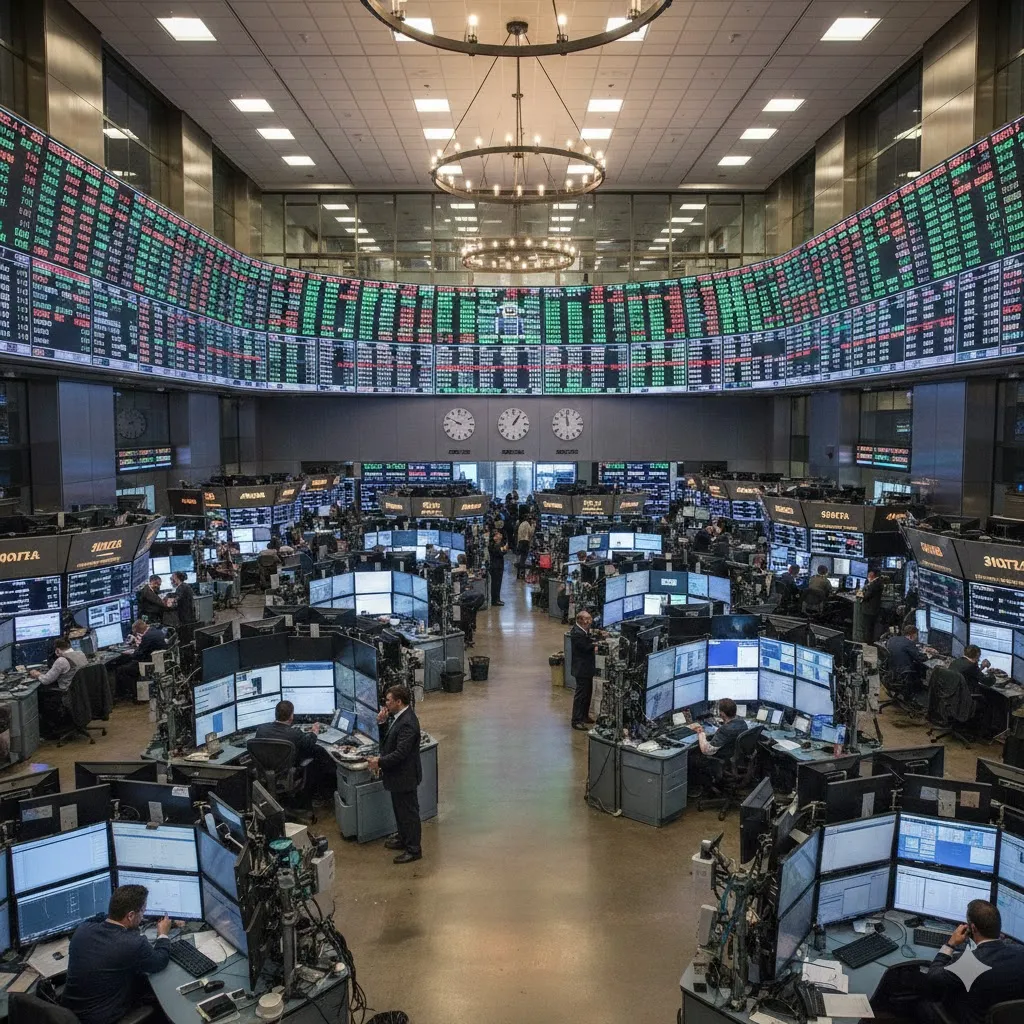

Technical analysis is a method traders use to study price movements, patterns, and market behavior to make trading decisions. Instead of focusing on company fundamentals or economic reports, technical analysis looks at what the market is actually doing—right now and in the past.
In 2025, technical analysis remains a core skill across stock, crypto, and forex markets. With faster data and real-time charts, traders rely on it to identify trends, manage risk, and time entries with greater precision.
Disclaimer: This article is for educational purposes only and does not provide financial, legal, or investment advice. Technical analysis does not guarantee results and should be used with proper risk management.
What technical analysis really means
Technical analysis is the study of price, volume, and market structure using charts and indicators. The underlying idea is that market prices reflect all available information—and that patterns tend to repeat due to human behavior.
Rather than asking why the market moves, technical analysis focuses on how it moves.
For example, a trader may notice that an asset repeatedly bounces at a certain price level and use that information to plan future trades.
Core principles behind technical analysis
Most technical analysis is built on a few foundational ideas:
- Price discounts all known information
- Prices move in trends
- Market behavior is repetitive
These principles guide how traders interpret charts and indicators across different markets and timeframes.
A realistic scenario: during a strong uptrend, traders may look for pullbacks instead of trying to predict market tops.
Common technical analysis tools
Technical analysis uses a wide range of tools, each serving a specific purpose.
| Tool Type | What It Helps Identify |
|---|---|
| Candlestick patterns | Market sentiment |
| Trend lines | Direction of price |
| Support & resistance | Key price levels |
| Moving averages | Trend strength |
| Momentum indicators | Overbought or oversold conditions |
These tools are often combined rather than used in isolation.
Pro Insight: Simple tools used consistently often outperform complex indicator stacks.
Technical analysis vs fundamental analysis
Technical and fundamental analysis take different approaches, but both are widely used.
- Technical analysis focuses on price action and timing
- Fundamental analysis focuses on value, earnings, and economics
Some traders rely solely on technical analysis, while others combine both approaches depending on their strategy and timeframe.
How technical analysis is used in real trading
Technical analysis supports decision-making in several ways:
- Identifying trends and reversals
- Timing entries and exits
- Setting stop-loss and profit targets
- Managing trade risk
For example, a swing trader may use daily charts to identify trends and shorter timeframes to refine entries.
Quick Tip: Start with higher timeframes to understand the overall trend before zooming in.
Limitations and risks of technical analysis
While powerful, technical analysis has limitations. Indicators can lag, patterns can fail, and markets can behave unpredictably during major news events.
A realistic scenario: a clean chart setup fails after unexpected economic data is released. This is why risk management matters more than prediction.
Technical analysis works best as a probability tool, not a guarantee.

Technical analysis in 2025 markets
In 2025, technical analysis is more accessible than ever. Advanced charting platforms, mobile apps, and AI-assisted tools allow traders to analyze markets quickly.
Despite new technology, the core principles remain unchanged—price behavior and human psychology still drive markets.
Frequently asked questions about technical analysis
Is technical analysis only for short-term trading?
No. It’s used across day trading, swing trading, and long-term investing.
Does technical analysis work in crypto markets?
Yes. Many traders use it extensively due to crypto’s price-driven nature.
Can beginners learn technical analysis?
Yes. Starting with basic chart patterns and trends is recommended.
Is technical analysis better than fundamental analysis?
Neither is better universally; they serve different purposes.
Do indicators guarantee accurate signals?
No. Indicators provide signals, not certainty.
Trusted U.S. sources for further reading
- U.S. Securities and Exchange Commission (SEC) – https://www.sec.gov
- FINRA Investor Education Foundation – https://www.finra.org
- Commodity Futures Trading Commission (CFTC) – https://www.cftc.gov
- National Institute of Standards and Technology (NIST) – https://www.nist.gov