

Swing trading sits between day trading and long-term investing, offering a balanced approach for those who want to capture short- to medium-term price movements. Instead of reacting to every tick in the market, swing traders aim to ride trends that last days or weeks. With the right structure, it can be a practical way to stay active without constant screen time.
What Swing Trading Is and How It Works

Swing trading focuses on capturing “swings” in price—movements that occur within broader trends. Traders typically hold positions from a few days to several weeks, depending on how the market develops.
Rather than entering and exiting within a single day, swing traders wait for setups such as pullbacks, breakouts, or reversals. Technical analysis plays a major role, especially chart patterns and indicators.
The goal is simple. Enter during a favorable setup, exit before momentum fades.
Swing Trading vs Day Trading and Investing
Understanding where swing trading fits helps set expectations.
| Factor | Swing Trading | Day Trading | Long-Term Investing |
|---|---|---|---|
| Time Horizon | Days to weeks | Minutes to hours | Years |
| Screen Time | Moderate | High | Low |
| Trade Frequency | Medium | Very high | Low |
| Risk Level | Moderate | High | Moderate |
| Strategy Focus | Trend capture | Intraday moves | Long-term growth |
Swing trading offers a middle ground—less intense than day trading, but more active than investing.
Common Swing Trading Strategies
Swing traders rely on repeatable patterns rather than constant prediction.
Trend following
Buying in an uptrend or selling in a downtrend after a pullback.
Breakout trading
Entering when price moves above resistance or below support with momentum.
Reversal trading
Identifying potential turning points after extended price moves.
Moving average strategies
Using indicators like the 50-day or 200-day average to confirm direction.
Each strategy depends on timing and confirmation signals rather than guesswork.
Tools and Indicators You’ll Need
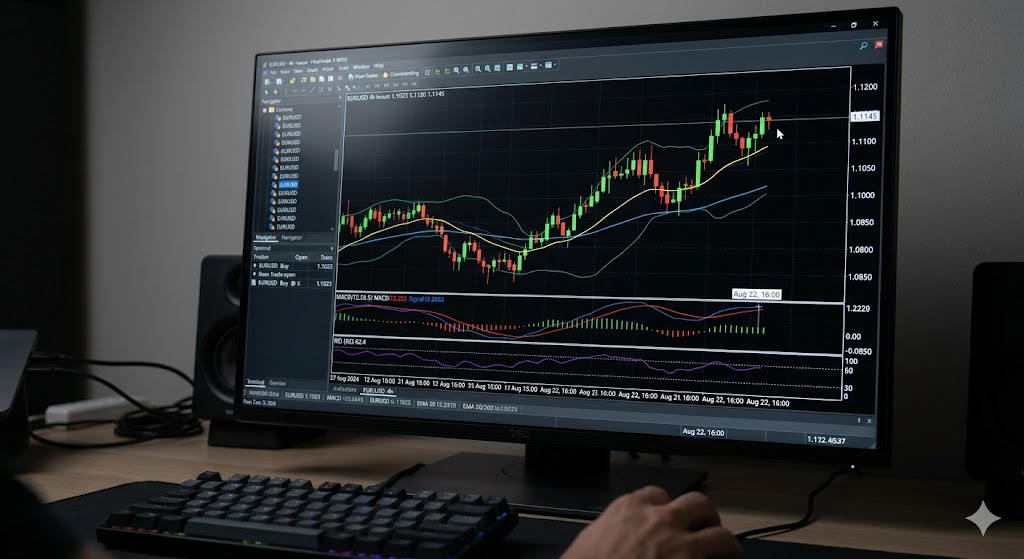
Effective swing trading depends on using the right tools.
Commonly used indicators include:
- Moving averages
- Relative Strength Index (RSI)
- MACD (momentum indicator)
- Support and resistance levels
Charting platforms help visualize these signals and identify entry points. Many traders also use alerts to monitor price levels without constantly watching the market.
Pro Insight
Consistent swing traders often focus on a small number of setups rather than chasing every opportunity. Repeating a proven strategy can be more effective than constantly switching approaches.
Managing Risk in Swing Trading
Risk management is essential, even with longer holding periods.
Stop-loss orders help limit downside if a trade moves against you. Position sizing ensures that no single trade has an outsized impact on your portfolio.
Market gaps—price changes between sessions—are another risk. Since positions are held overnight, unexpected news can affect price before the next trading session begins.
A simple scenario illustrates this. A trader enters a breakout trade with a clear stop-loss. The trade fails, but the predefined exit limits the loss. Without that structure, losses could expand quickly.
Quick Tip
Plan your exit before entering a trade. Knowing where you’ll take profit or cut losses can help reduce emotional decisions.
How to Get Started With Swing Trading

Starting swing trading doesn’t require constant activity, but it does require preparation.
Begin by learning basic technical analysis and understanding market behavior. Practice with a demo account to test strategies without financial risk.
Start small when using real capital. This allows you to build experience while managing potential losses.
It’s also helpful to track your trades. Reviewing what worked—and what didn’t—can improve your approach over time.
Common Mistakes to Avoid
Many beginners enter trades without a clear plan. This often leads to inconsistent results.
Another mistake is overtrading. Swing trading works best when you wait for strong setups rather than forcing trades.
Ignoring broader market trends can also be risky. Even strong setups can fail if the overall market is moving in the opposite direction.
When Swing Trading Makes Sense
Swing trading can be a good fit if:
- You want active involvement without full-time trading
- You can dedicate time for analysis a few times per week
- You prefer structured strategies over constant monitoring
It may not suit those looking for fully passive investing or those uncomfortable with short-term market fluctuations.
Frequently Asked Questions
What is swing trading
It’s a strategy that aims to capture price movements over days or weeks.
Is swing trading better than day trading
It depends on your schedule and preferences. Swing trading requires less constant monitoring.
How much money do I need to start
You can start with a small amount, though it’s important to manage risk carefully.
What markets can I swing trade
Stocks, forex, and cryptocurrencies are commonly used.
Can beginners learn swing trading
Yes, but starting with education and practice is important.
Conclusion
Swing trading offers a structured way to participate in financial markets without the intensity of day trading. By focusing on short- to medium-term trends and applying disciplined risk management, it provides a balanced approach for many traders. With patience and consistent strategy execution, it can become a practical addition to your overall financial approach.
https://www.sec.gov
https://www.investor.gov
https://www.finra.org
https://www.cftc.gov
This article is for general informational purposes only and does not provide legal, financial, medical, or professional advice. Policies, rates, and regulations may change over time.