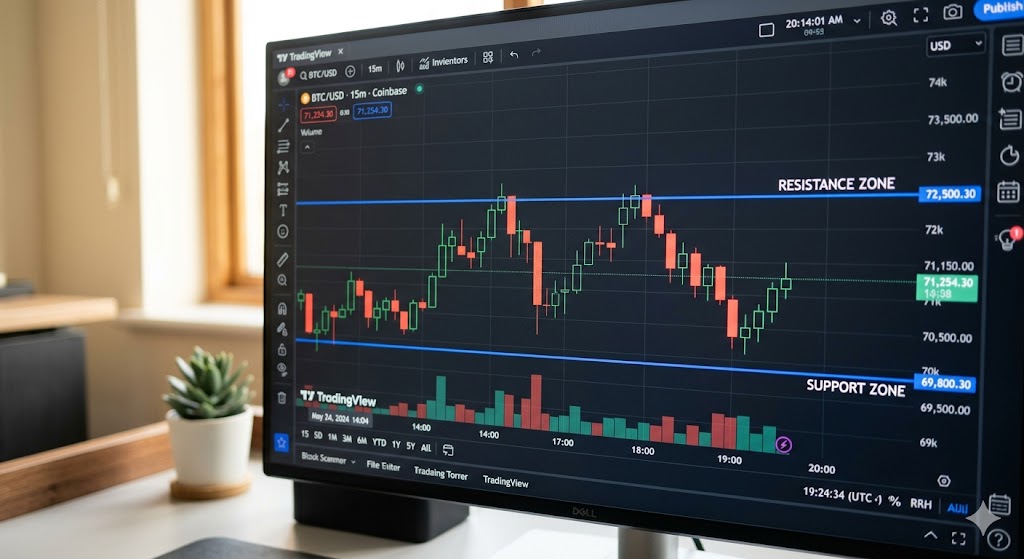

Short-term trading focuses on capturing price movements over brief periods—ranging from minutes to a few days. It’s a fast-paced approach that relies heavily on timing, discipline, and market awareness rather than long-term fundamentals.
For many traders, short-term trading offers flexibility and frequent opportunities, but it also demands consistency and a clear strategy.
What Is Short Term Trading

Short-term trading involves entering and exiting positions quickly to take advantage of small price movements. Unlike long-term investing, the goal isn’t to hold assets for growth—it’s to capitalize on short-term fluctuations.
Common timeframes include:
- Intraday (minutes to hours)
- Swing trading (a few days)
- Very short-term scalping (seconds to minutes)
Each style requires a different level of attention and speed.
Common Short Term Trading Strategies
Different strategies suit different personalities and schedules.
Day trading
Positions are opened and closed within the same day to avoid overnight risk.
Swing trading
Trades last several days, aiming to capture short-term trends.
Scalping
Focuses on very small price movements with high trade frequency.
Breakout trading
Targets moments when price moves beyond key levels with momentum.
Most traders experiment before settling into a consistent approach.
Key Tools for Short Term Trading
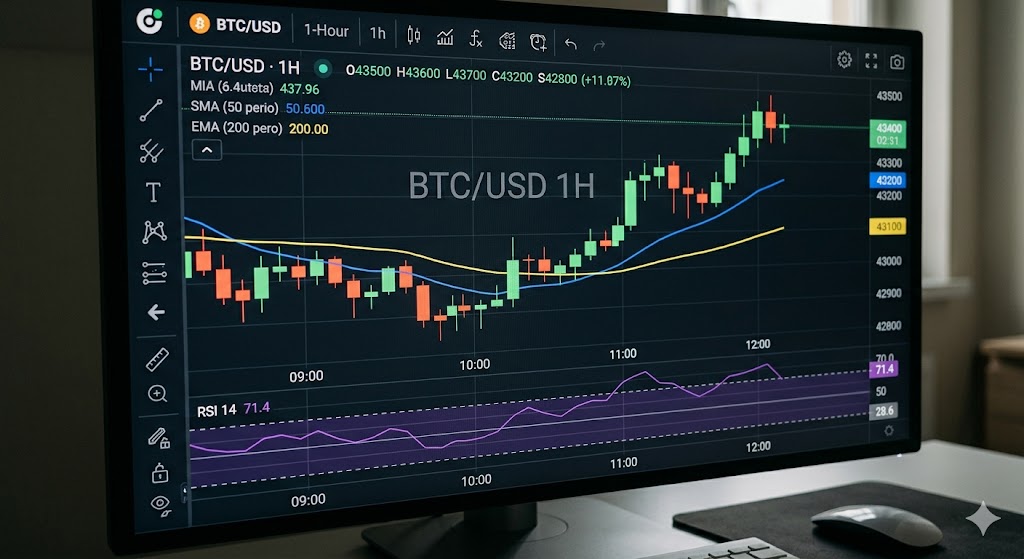
Short-term trading relies heavily on technical tools.
Price charts
Candlestick charts are commonly used to track real-time movement.
Indicators
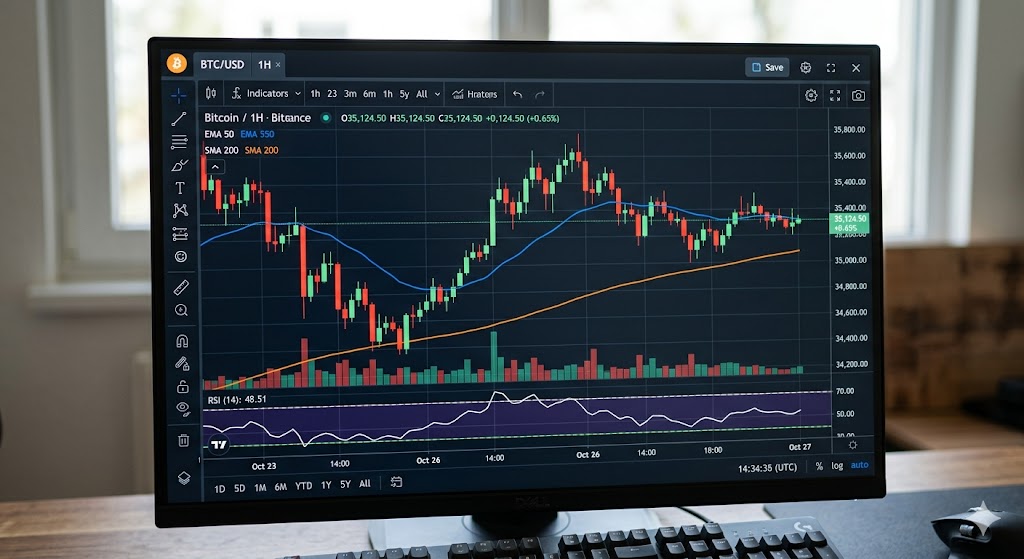
Moving averages, RSI, and volume indicators help confirm trends.
Moving average concept
y = \frac{1}{n} \sum_{i=1}^{n} P_i
This helps smooth price data and identify short-term direction.
Volume analysis
High volume often confirms strong price movement.
Comparison of Short Term Trading Styles
| Strategy | Timeframe | Best For |
|---|---|---|
| Scalping | Seconds–minutes | High focus, fast execution |
| Day Trading | Intraday | Active traders |
| Swing Trading | Days | Moderate time commitment |
| Breakout Trading | Variable | Momentum-focused traders |
Each style comes with different risk levels and time demands.
Pro Insight
Consistency often matters more than strategy choice. Traders who follow a clear plan—entry, exit, and risk limits—tend to perform more steadily than those constantly switching approaches.
Risk Management in Short Term Trading
Managing risk is central to survival in short-term markets.
Set stop-loss levels
Limits potential losses on each trade.
Control position size
Avoid risking too much on a single trade.
Avoid overtrading
Too many trades can increase mistakes and costs.
Stay aware of market conditions
Volatility and news events can shift behavior quickly.
Without risk management, even strong strategies can fail.
Quick Tip
Before entering a trade, decide your exit point—both for profit and loss. Making decisions in advance helps reduce emotional reactions.
Real-World Micro Scenario
A trader identifies a stock breaking above resistance with strong volume. Instead of entering impulsively, they wait for a small pullback and confirmation.
They set a stop-loss below the breakout level and exit after a modest gain. The trade is controlled, not reactive.
Common Mistakes to Avoid
Short-term trading can be unforgiving of small errors.
Chasing price movements
Entering late increases risk.
Ignoring trading costs
Frequent trades can add up in fees.
Trading without a plan
Leads to inconsistent decisions.
Letting emotions drive trades
Fear and greed often disrupt discipline.
Frequently Asked Questions
What is short-term trading in simple terms?
It’s buying and selling assets over short periods to capture small price movements.
Is short-term trading profitable?
It can be, but it requires discipline, strategy, and strong risk management.
How much time does short-term trading require?
It depends on the strategy—scalping and day trading require more active monitoring than swing trading.
What is the best strategy for beginners?
Swing trading is often considered more manageable due to its slower pace.
Do I need technical analysis for short-term trading?
Yes, most short-term traders rely on charts and indicators to guide decisions.
Conclusion
Short-term trading offers flexibility and frequent opportunities, but it demands structure and discipline. Success often comes from managing risk, sticking to a plan, and learning from each trade.
By focusing on consistency rather than quick wins, traders can approach short-term markets with greater clarity and control.
Trusted U.S. Resources
https://www.investor.gov
https://www.sec.gov
https://www.finra.org
https://www.cftc.gov
This article is for general informational purposes only and does not provide legal, financial, medical, or professional advice. Policies, rates, and regulations may change over time.