

Learn practical, legal ways to reduce your tax bill using smart planning, timing, and tax-efficient strategies.
Paying taxes is unavoidable—but overpaying isn’t. Knowing how to reduce your tax bill legally can make a meaningful difference in what you keep each year, without aggressive schemes or last-minute panic.
The most effective strategies aren’t complicated. They’re structural, repeatable, and based on how the tax system already works.
Why Most People Overpay on Taxes
Many taxpayers focus only on filing season, not the decisions made throughout the year that shape the final bill.
A common real-life scenario: an investor sells assets without checking holding periods, or a salaried worker ignores available deductions and credits. Nothing illegal happens—but the tax bill ends up higher than necessary.
Reducing taxes is less about loopholes and more about awareness.
Use Timing to Your Advantage
Timing affects how income and gains are taxed.
Delaying income into the next year or accelerating deductible expenses into the current year can lower taxable income. For investors, holding assets just a bit longer may qualify gains for lower long-term rates.
Even small timing adjustments can have outsized effects when applied consistently.

Take Full Advantage of Tax-Advantaged Accounts
Tax-advantaged accounts are among the most reliable ways to reduce taxes.
Retirement accounts, health-related accounts, and education savings options allow income to grow with reduced or delayed taxation. Using them effectively lowers current taxes or future tax burdens—sometimes both.
For example, contributing to a retirement plan may reduce taxable income today while allowing long-term compounding to work uninterrupted.
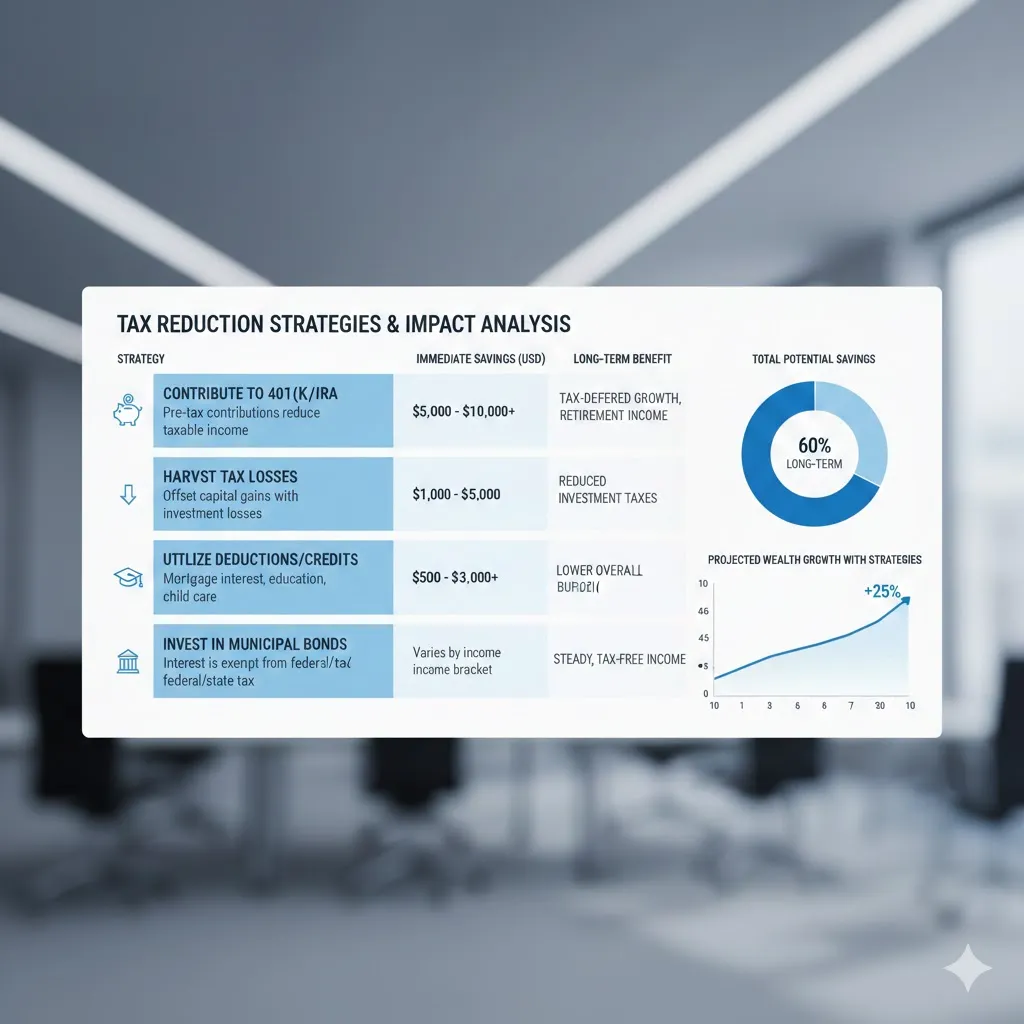
Compare Common Ways to Reduce a Tax Bill
| Strategy | Best For | Tax Impact | Risk Level |
|---|---|---|---|
| Retirement contributions | Earned income | Lowers taxable income | Low |
| Long-term investing | Capital gains | Lower tax rates | Low |
| Tax-loss harvesting | Investors | Offsets gains | Medium |
| Itemized deductions | Homeowners & donors | Reduces taxable income | Low |
| Credits vs deductions | Families & students | Direct tax reduction | Low |
This comparison shows why structure often beats complexity.
Avoid Mistakes That Increase Taxes Unnecessarily
Some tax bills rise due to simple missteps: frequent trading, ignoring deductions, or placing tax-inefficient assets in taxable accounts.
Another common issue is reacting emotionally—selling assets during volatility without considering tax consequences. Once taxes are triggered, they can’t be undone.
Tax efficiency rewards patience and planning, not speed.
Build Habits That Lower Taxes Every Year
Reducing taxes isn’t a one-time task. It’s a habit.
Reviewing income sources, tracking deductible expenses, and checking tax implications before decisions are made helps keep the bill under control year after year.
Those who treat taxes as part of financial planning—not an annual chore—usually keep more over time.

Disclaimer
This article is for general informational purposes only and does not constitute tax, legal, or financial advice. Tax rules vary by individual circumstances. Consult qualified professionals before making decisions.
Pro Insight
The biggest tax savings often come from decisions made months before filing—not from last-minute adjustments.
Quick Tip
Before selling an investment, check whether waiting a short time could move it into a lower tax category.
Frequently Asked Questions
What is the easiest way to reduce a tax bill?
Using tax-advantaged accounts and avoiding unnecessary taxable events.
Are tax credits better than deductions?
Often yes, because credits reduce taxes dollar-for-dollar.
Can investors legally lower taxes?
Yes, through long-term holding, loss offsets, and account placement.
Does reducing taxes mean taking more risk?
No. Many tax-saving strategies reduce risk by improving efficiency.
Should I plan taxes year-round?
Yes. Ongoing planning is far more effective than last-minute fixes.
Conclusion
Learning how to reduce your tax bill isn’t about exploiting the system—it’s about using it correctly. With better timing, smart account use, and consistent habits, you can lower taxes legally while keeping your financial strategy intact.
Pay what you owe—but not more than you have to.
Trusted U.S. Resources
Internal Revenue Service — Tax Planning
https://www.irs.gov
U.S. Securities and Exchange Commission — Investor Taxes
https://www.sec.gov
FINRA — Tax-Efficient Investing
https://www.finra.org