

A clear guide to building a nest egg, why it matters, and how people plan for long-term security in 2026.
A nest egg is more than just savings. It represents security, flexibility, and the ability to handle life without constant financial stress. In 2026, when careers are less linear and costs continue to rise, building a reliable nest egg has become a core part of personal financial planning.
Rather than focusing on quick wins, a nest egg is about steady preparation for the years ahead.
What a Nest Egg Really Means
A nest egg refers to money set aside for the future, often intended for retirement, emergencies, or long-term life goals. Unlike short-term savings, a nest egg is built gradually and protected carefully.
For example, someone may contribute regularly to retirement and investment accounts over decades, allowing time and consistency to do most of the work.
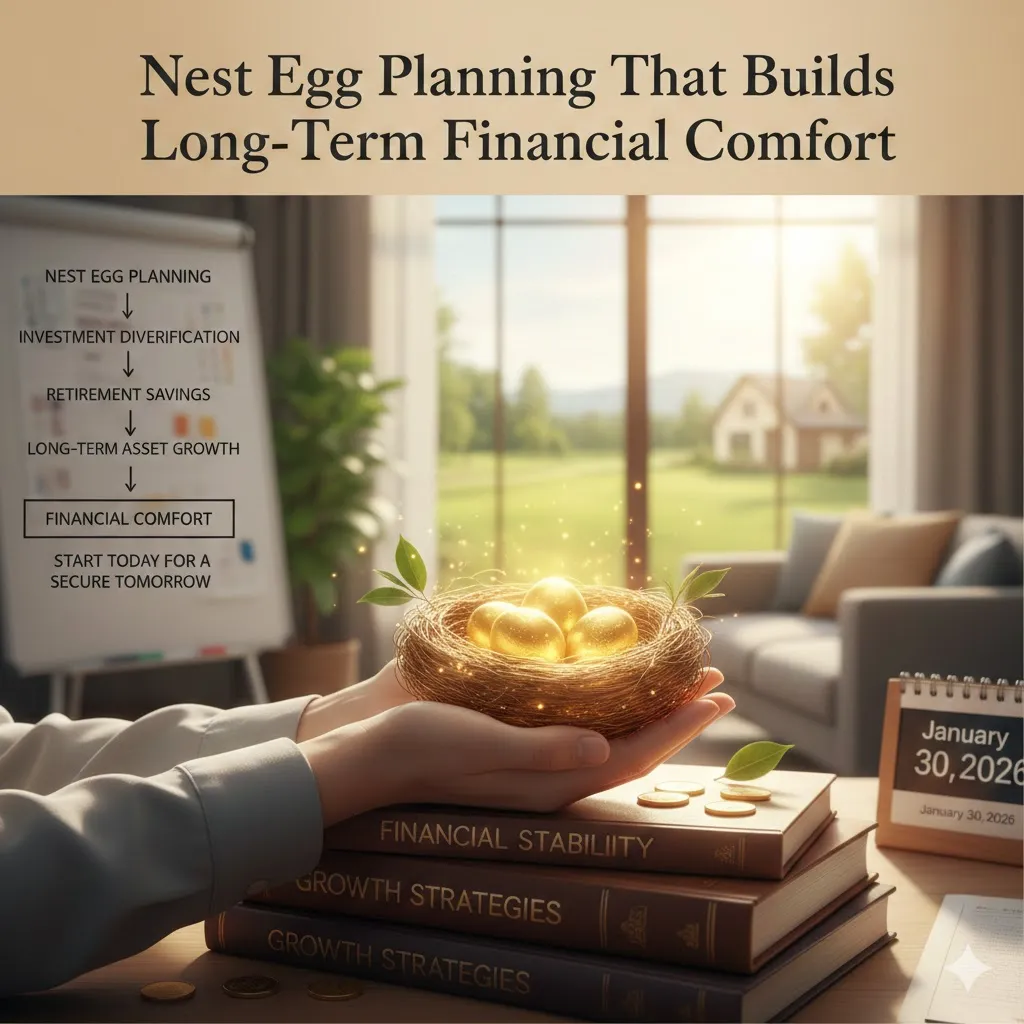
The goal isn’t perfection. It’s resilience—having options when income changes or life takes unexpected turns.
Why Building a Nest Egg Matters More Today
Economic uncertainty, longer life expectancy, and shifting job markets mean fewer guarantees. A strong nest egg helps absorb those uncertainties.
Imagine two people approaching mid-career. One has steadily built savings. The other has not. When a job change happens, the difference isn’t just financial—it’s emotional. One has time. The other has pressure.
This is why nest eggs are often discussed alongside retirement planning, long-term savings, and tax-efficient strategies.
Key Elements of a Strong Nest Egg
Building a nest egg doesn’t rely on one action. It’s a system.
Consistent Contributions
Regular saving matters more than timing the market. Small amounts added consistently can compound meaningfully over time.
Time and Patience
The longer money stays invested, the more powerful compounding becomes. Time reduces the need for risky decisions.
Balanced Growth and Protection
A nest egg should grow, but also be protected from unnecessary risk as goals get closer.

Nest Egg vs Short-Term Savings
| Focus Area | Nest Egg | Short-Term Savings |
|---|---|---|
| Time horizon | Long-term | Short-term |
| Primary purpose | Future security | Immediate needs |
| Growth strategy | Gradual and structured | Minimal growth |
| Risk tolerance | Managed and intentional | Very low |
This distinction helps avoid using long-term funds for short-term decisions.
How People Grow Their Nest Egg Over Time
Nest eggs evolve. Early years often focus on growth. Later years shift toward stability and income planning.
Life events—career changes, family needs, or health considerations—often prompt adjustments. Regular reviews help keep the nest egg aligned with reality rather than outdated assumptions.

Flexibility is a strength, not a weakness, in long-term planning.
Disclaimer
This article is for informational purposes only and does not constitute financial, investment, or tax advice. Individual outcomes vary based on personal circumstances.
Pro Insight
A nest egg doesn’t need a specific number to be successful. What matters is how well it supports your lifestyle and choices.
Quick Tip
Automating contributions removes emotion from saving and makes consistency far easier to maintain.
Common Mistakes When Building a Nest Egg
One common mistake is delaying savings because the goal feels distant. Another is being overly conservative too early, allowing inflation to erode value.
Chasing short-term gains can also undermine long-term stability by adding unnecessary risk.
FAQs About Nest Eggs
When should I start building a nest egg?
As early as possible, but starting later still helps with consistency.
Is a nest egg only for retirement?
No. It can support flexibility, emergencies, or long-term goals.
Should a nest egg be invested?
Often yes, but risk should align with time horizon and comfort level.
How often should I review my nest egg plan?
Many people review annually or after major life changes.
Can goals change over time?
Yes. A good nest egg plan adapts as life evolves.
Conclusion
A nest egg is not about predicting the future—it’s about preparing for it. By saving consistently, managing risk, and allowing time to work in your favor, a nest egg creates confidence that money alone can’t buy.
In 2026, building a nest egg remains one of the most reliable ways to turn uncertainty into stability.
U.S. Trusted Resources
- U.S. Securities and Exchange Commission – Investor Education
https://www.investor.gov - Internal Revenue Service (IRS) – Retirement & Savings
https://www.irs.gov - Consumer Financial Protection Bureau (CFPB) – Saving Strategies
https://www.consumerfinance.gov - Federal Reserve – Household Financial Education
https://www.federalreserve.gov