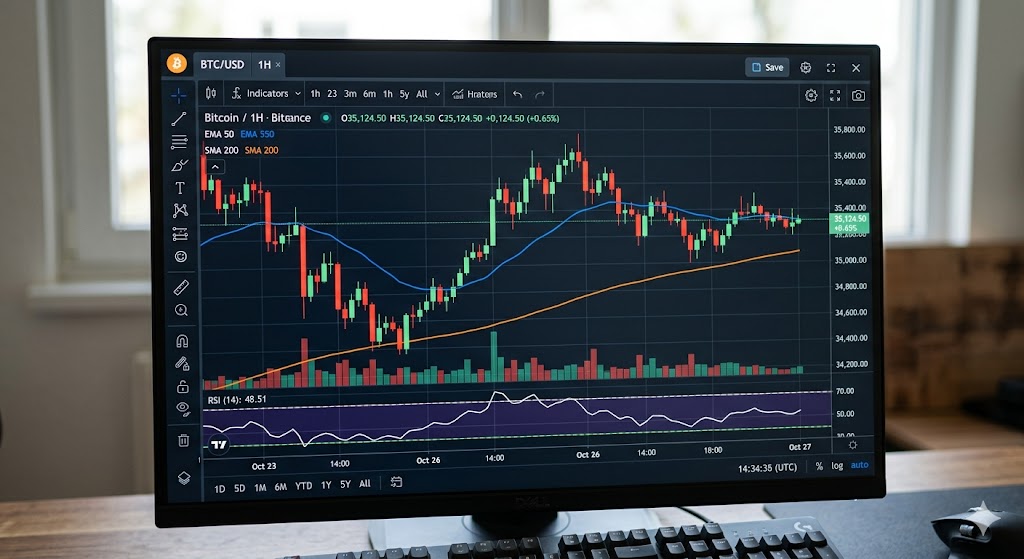

Momentum trading is a strategy focused on following strong price movements rather than predicting reversals. Traders look for assets that are already moving decisively—either upward or downward—and aim to ride that momentum for short-term gains.
Instead of asking “what’s undervalued,” momentum traders ask a simpler question: “what’s already moving—and why?”
What Is Momentum Trading

Momentum trading is based on the idea that assets trending strongly tend to continue moving in the same direction for a period of time.
This approach typically involves:
- Entering trades during strong trends
- Exiting before momentum slows or reverses
- Using technical signals to confirm strength
Momentum can appear in stocks, forex, and crypto markets—especially during periods of high volatility.
How Momentum Trading Works
Momentum traders focus on price strength and participation rather than long-term value.
Key signals include:
Price movement
Rapid upward or downward trends indicate potential momentum.
Volume spikes
Higher trading volume often confirms stronger moves.
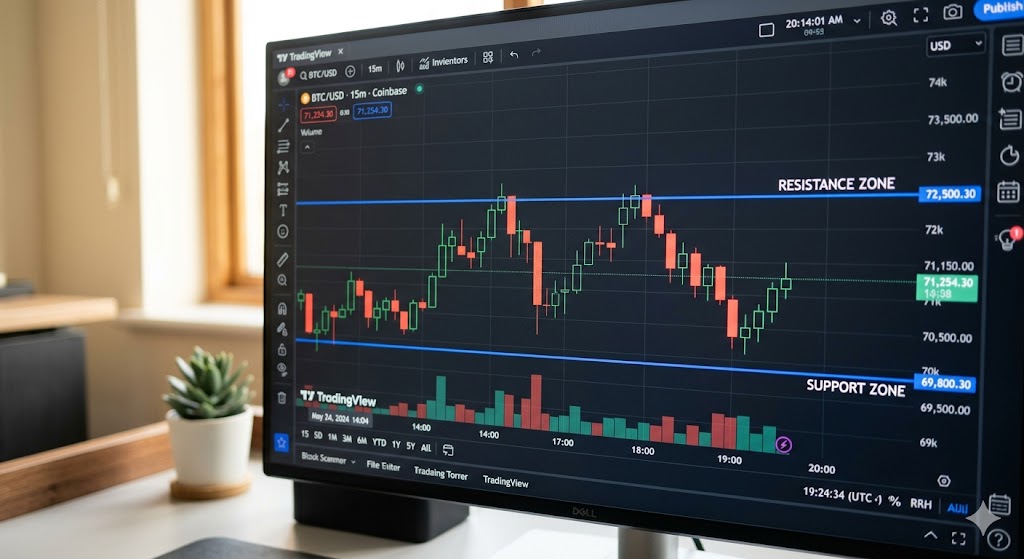
Breakouts
When price moves above resistance or below support, momentum may accelerate.
Momentum indicator concept
Momentum = P_t – P_{t-n}
This measures how much price has changed over a specific period.
Popular Momentum Trading Indicators
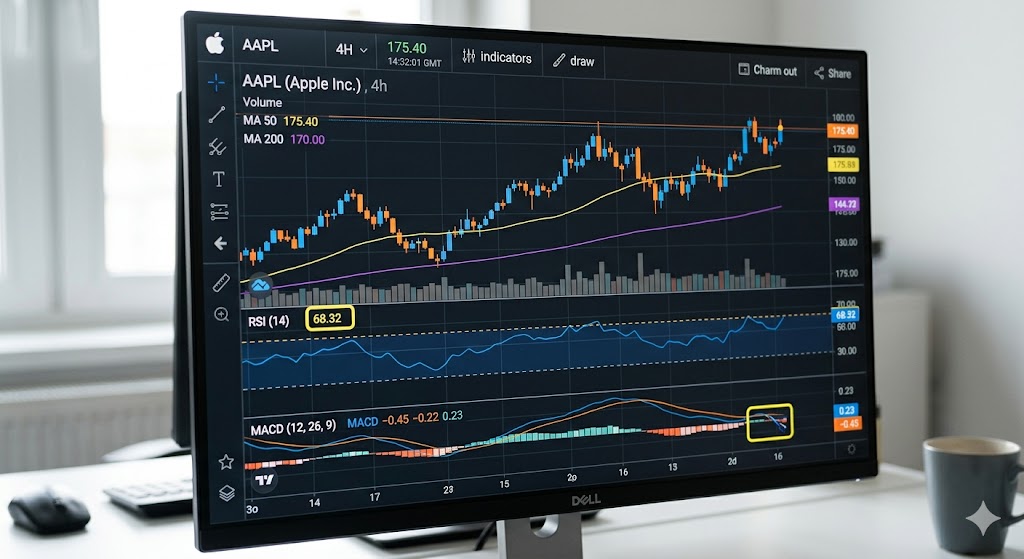
Momentum trading often relies on a combination of indicators.
Relative Strength Index (RSI)
Helps identify overbought or oversold conditions.
MACD (Moving Average Convergence Divergence)
Tracks momentum shifts and trend changes.
Volume indicators
Confirm whether a move has strong participation.
Moving averages
Help identify trend direction and continuation.
Using multiple indicators together can reduce false signals.
Momentum Trading vs Other Strategies
| Strategy | Focus | Key Difference |
|---|---|---|
| Momentum Trading | Strong trends | Follows existing movement |
| Swing Trading | Short-term trends | Holds positions longer |
| Value Investing | Undervalued assets | Focuses on fundamentals |
| Scalping | Small price moves | Very short timeframes |
Momentum trading stands out because it prioritizes speed and trend strength.
Pro Insight
Momentum often fades faster than expected. Experienced traders don’t try to capture the entire move—they focus on the most reliable portion, entering after confirmation and exiting before exhaustion.
How to Start Momentum Trading
A structured approach can help improve consistency.
1. Scan for strong movers
Look for assets with high volume and clear trends.
2. Wait for confirmation
Avoid entering too early—confirm the move with indicators.
3. Set clear entry and exit levels
Define your plan before entering the trade.
4. Manage risk carefully
Use stop-loss orders to limit downside.
Quick Tip
Avoid chasing sharp price spikes. Waiting for a brief pullback before entering can improve risk control and reduce emotional decisions.
Real-World Micro Scenario
A trader notices a stock breaking above resistance with unusually high volume. Instead of buying immediately, they wait for a slight pullback.
After confirmation that the trend continues, they enter and ride the upward momentum for a short period before exiting as volume begins to decline.
Common Mistakes to Avoid
Momentum trading can be effective, but it requires discipline.
Chasing late entries
Entering after the move is extended increases risk.
Ignoring volume signals
Weak volume can lead to false breakouts.
Holding too long
Momentum trades are not meant for long-term holding.
Overtrading
Too many trades can reduce overall performance.

Frequently Asked Questions
What is momentum trading in simple terms?
It’s a strategy that involves buying assets that are rising and selling those that are falling, based on trend strength.
Is momentum trading suitable for beginners?
It can be, but it requires discipline and understanding of charts and indicators.
What markets work best for momentum trading?
Stocks, forex, and cryptocurrencies all offer momentum opportunities, especially during high volatility.
How long do momentum trades last?
They can last from minutes to several days, depending on the strength of the trend.
What is the biggest risk in momentum trading?
Entering too late or holding too long after momentum fades.
Conclusion
Momentum trading focuses on riding strong market movements rather than predicting them. With the right combination of timing, confirmation, and risk control, it can be a practical approach for active traders.
The key is not to chase every move—but to recognize when momentum is real and act with discipline.
Trusted U.S. Resources
https://www.investor.gov
https://www.sec.gov
https://www.finra.org
https://www.cftc.gov
This article is for general informational purposes only and does not provide legal, financial, medical, or professional advice. Policies, rates, and regulations may change over time.