
Low-fee robo advisor solutions have become one of the most accessible ways to invest in 2026. As traditional advisor costs rise, many investors—especially beginners and long-term planners—seek cost-efficient automation that still delivers disciplined, diversified portfolios. But “low fee” doesn’t automatically mean “best.” Knowing how pricing works and what you actually get matters.
This guide helps you understand low-fee robo advisors in a practical, real-world way.
This article is for general informational purposes only and does not provide financial, legal, or investment advice. Outcomes vary depending on market conditions and individual choices.
Why low fees matter in automated investing
Fees eat returns—not just in the first year, but over decades.
Even a difference of 0.50% annually can cost tens of thousands over a long horizon. A young investor in Ohio learned this when she compared two robo advisors: the cheaper one returned a substantially higher net gain over 10 years simply because her costs were lower, even though both portfolios performed similarly.
Low fees matter most when you’re investing for the long term.

What “low-fee” really means
Different platforms define fees differently. Some charge a flat management fee; others bundle platform costs inside fund expense ratios.
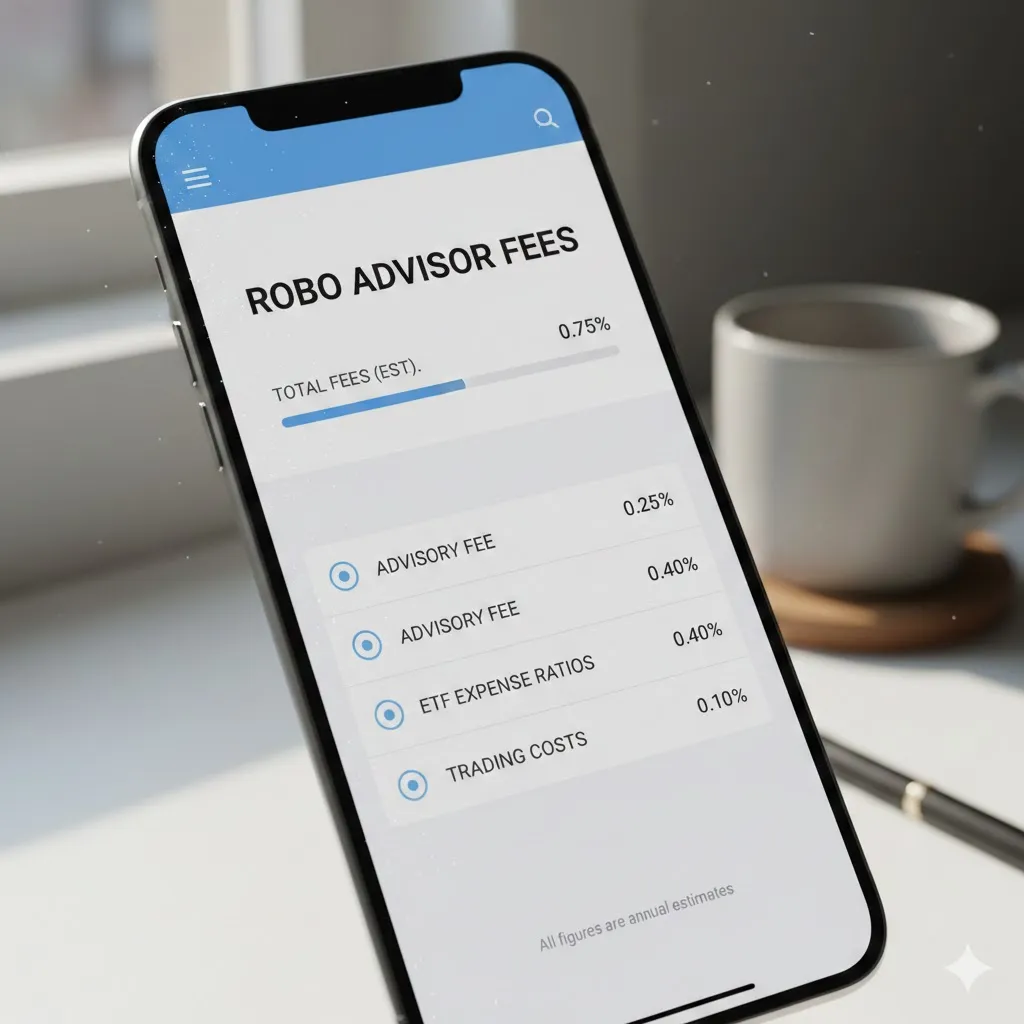
Typical cost components include:
- Robo management fee – Paid to the platform
- ETF expense ratios – Embedded in the funds you hold
- Underlying fund costs – May vary widely across portfolios
A truly low-fee setup minimizes all three—not just the headline number.
If your site already explains investment fees generally or ETF fundamentals, internal linking here adds context without overwhelming readers.
How to compare robo advisor fee structures
Not all low-fee labels reflect equivalent value. This comparison clarifies the difference.
| Fee Type | What You Pay | Typical Range | What to Watch For |
|---|---|---|---|
| Advisory fee | Platform service cost | ~0.15%–0.50% | Lower is better |
| Fund/ETF expenses | Operational cost inside funds | ~0.02%–0.20% | Important long-term |
| Trading/Account fees | Transaction or maintenance | $0–$50/year | Should be minimal |
| Premium features | Access to advisors | Extra | Optional |
Pro Insight
A low advisory fee is only truly beneficial if the portfolio also uses low-cost ETFs and avoids unnecessary turnover. High trading frequency can quietly boost internal costs—even on “low-fee” platforms.
Quick Tip
Ask for a fee breakdown estimate before opening an account. A simple projected annual cost based on your balance helps avoid surprises.
When low fees might not be enough
Lower cost is great—but not if you lose clarity or service.
If you need help with:
- tax-efficient upgrades
- complex planning
- business-related accounts
…then a hybrid model (low-fee robo plus occasional human advisor) often outperforms a pure robo alone.
A small business owner in New York used a low-fee robo for baseline investing while consulting a planner annually for retirement adjustments.

FAQs
What is a low-fee robo advisor?
It’s an automated investment platform with minimal advisory or management fees, often paired with low-cost ETFs.
How much should I expect to pay?
Some platforms charge as little as 0.15%–0.25% total annual fees, not including fund costs.
Do low fees guarantee better returns?
Not guaranteed—performance depends on markets and the strategy—but lower costs improve net returns all else equal.
Are there hidden fees I should watch for?
Yes. ETF expense ratios and trading costs add to total costs even if the advisory fee is low.
Can beginners use low-fee robo advisors?
Yes. They’re often ideal for beginners due to simplicity and low cost.
Conclusion
Low-fee robo advisor options can be powerful tools for long-term investors who want automated discipline without high costs. But cost is just one piece. Understanding total fees, portfolio construction, and your own goals ensures you get both efficiency and value—without unexpected charges or compromises.
Trusted U.S. Resources
- U.S. Securities and Exchange Commission (SEC): https://www.sec.gov
- FINRA Investor Education: https://www.finra.org
- Vanguard Investor Research: https://investor.vanguard.com