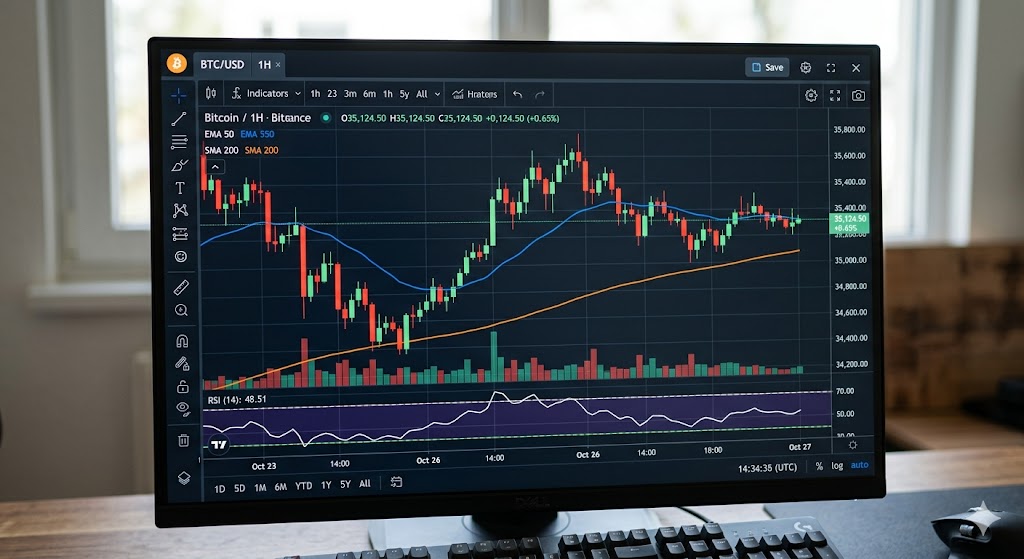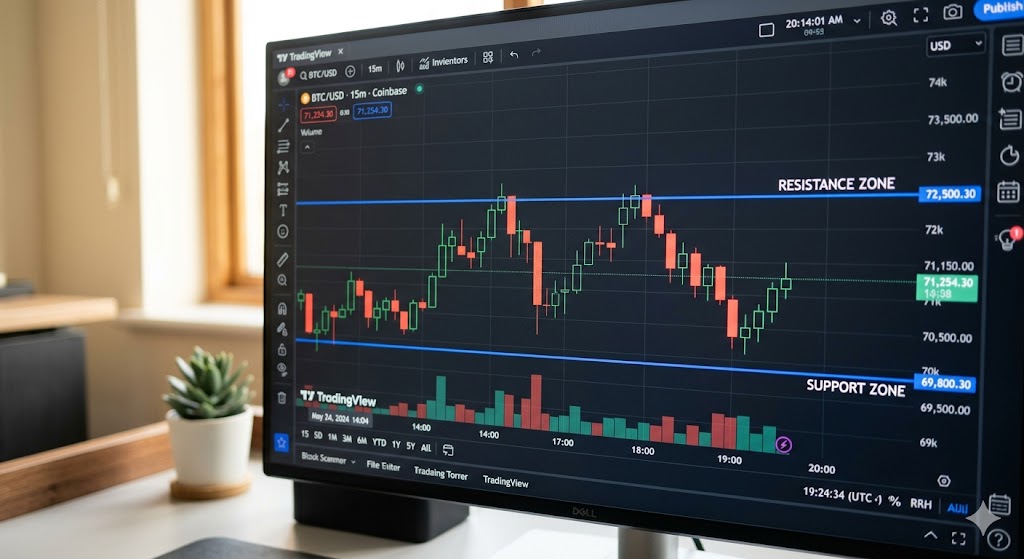

Intraday trading involves buying and selling financial assets within the same trading day. Positions are opened and closed before the market closes, which helps traders avoid overnight risk.
This approach focuses on short-term price movements, requiring attention, discipline, and a clear plan rather than long-term market predictions.
What Is Intraday Trading
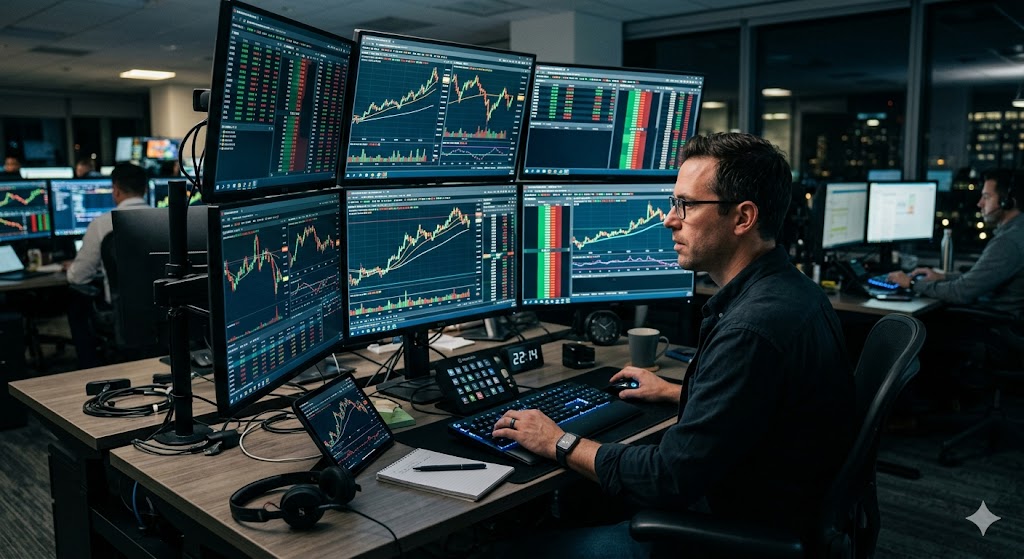
Intraday trading is centered on capturing small price changes throughout the day. Traders rely on quick decisions and short holding periods rather than waiting for long-term growth.
Key characteristics include:
- Trades completed within the same day
- No overnight positions
- High reliance on timing and execution
- Frequent use of technical analysis
It’s often used in stocks, forex, and cryptocurrency markets.
How Intraday Trading Works
Intraday traders monitor price movements in real time and look for patterns or signals to enter and exit trades.
Common elements include:
Entry points
Based on breakouts, pullbacks, or indicator signals.
Exit strategy
Defined profit targets and stop-loss levels.
Market timing
Many traders focus on high-volume periods like market open or close.
Basic price movement concept
genui{“math_block_widget_always_prefetch_v2”: {“content”: “y = mx + b”}}
This simplified model reflects how trends can be visualized over short periods.
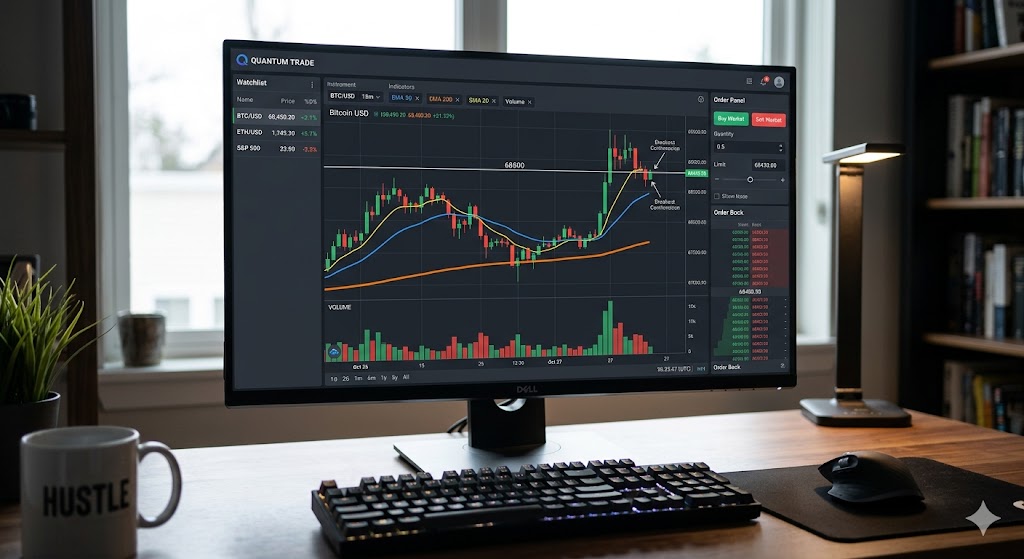
Popular Intraday Trading Strategies
Scalping
Focuses on very small price changes with rapid trades.
Momentum trading
Targets assets with strong directional movement.
Breakout trading
Enters trades when price moves beyond key levels.
Reversal trading
Attempts to capture turning points in price trends.
Each strategy requires different levels of speed and experience.
Intraday Trading vs Other Trading Styles
| Trading Style | Holding Period | Key Focus |
|---|---|---|
| Intraday Trading | Same day | Short-term price moves |
| Swing Trading | Days to weeks | Trend capture |
| Long-Term Investing | Months to years | Fundamental growth |
| Scalping | Minutes | Very small price changes |
Intraday trading sits between scalping and swing trading in terms of pace and complexity.
Pro Insight
Many experienced traders focus on a limited number of setups rather than chasing every opportunity. Consistency in execution often matters more than the number of trades.
Risk Management in Intraday Trading
Managing risk is essential for sustainability.
Set stop-loss orders
Limit potential losses on each trade.
Control position size
Avoid overexposure to a single position.
Avoid overtrading
Too many trades can lead to mistakes and higher costs.
Stay disciplined
Stick to your strategy even during volatile periods.
Without risk control, even good trades can lead to losses.
Quick Tip
Trade during high-volume periods, such as market opening hours. Increased liquidity can improve execution and reduce unexpected price gaps.
Real-World Micro Scenario
A trader identifies a stock breaking above resistance shortly after the market opens. Instead of entering immediately, they wait for confirmation through volume and a small pullback.
They enter with a predefined stop-loss and exit after a modest gain—all within the same day.
Common Mistakes to Avoid
Intraday trading can amplify small errors.
Chasing trades
Entering late often increases risk.
Ignoring fees and spreads
Frequent trading can reduce profits.
Trading without a plan
Leads to inconsistent results.
Emotional decision-making
Quick reactions can override strategy.

Frequently Asked Questions
What is intraday trading in simple terms?
It’s buying and selling assets within the same day to profit from short-term price changes.
Is intraday trading profitable?
It can be, but it requires skill, discipline, and effective risk management.
How much time does intraday trading require?
It often requires active monitoring during trading hours.
What is the best strategy for intraday trading?
There is no single best strategy—momentum and breakout strategies are commonly used.
Do beginners succeed in intraday trading?
Some do, but it typically involves a learning curve and consistent practice.
Conclusion
Intraday trading offers opportunities to profit from short-term market movements, but it demands focus, discipline, and structured decision-making. Success often comes from consistency, risk control, and a clear understanding of market behavior.
By approaching it with a well-defined plan, traders can navigate fast-moving markets more effectively.
Trusted U.S. Resources
https://www.investor.gov
https://www.sec.gov
https://www.finra.org
https://www.cftc.gov
This article is for general informational purposes only and does not provide legal, financial, medical, or professional advice. Policies, rates, and regulations may change over time.