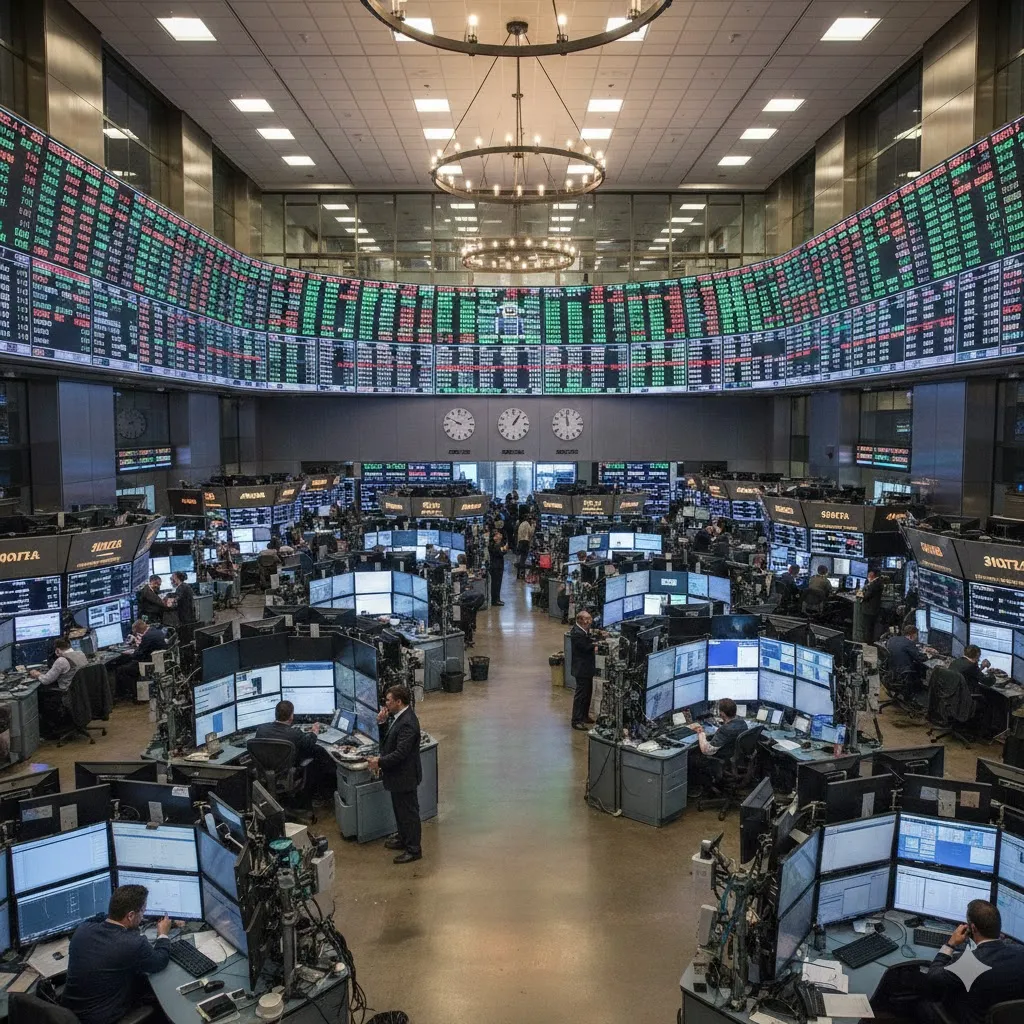

Day trading is a trading style focused on buying and selling financial assets within the same trading day. Instead of holding positions overnight, day traders aim to take advantage of short-term price movements that occur during market hours.
In 2025, day trading remains popular across stocks, forex, and crypto markets, especially as trading platforms and real-time data become more accessible. Still, the approach requires discipline, preparation, and a clear understanding of risk.
Disclaimer: This article is for educational purposes only and does not provide financial, legal, or investment advice. Day trading involves significant risk, and results vary widely by individual.
What day trading really means
Day trading involves opening and closing trades within a single day to avoid overnight market risk. Positions are usually closed before the market shuts to prevent exposure to unexpected news or price gaps.
Day traders rely on short-term price patterns, liquidity, and timing rather than long-term fundamentals. Trades may last minutes or hours, depending on the strategy.
For example, a trader might buy an asset after a breakout in the morning and sell it later the same day once a target price is reached.
Markets commonly used for day trading
Day trading can be applied across several markets, each with different characteristics.
Stocks offer regulated environments and set trading hours.
Forex provides high liquidity and nearly 24-hour access.
Crypto trades continuously, allowing flexibility but higher volatility.
The choice of market often depends on risk tolerance, available time, and familiarity with price behavior.
Day trading vs long-term investing
Understanding this difference helps clarify expectations.
| Aspect | Day Trading | Long-Term Investing |
|---|---|---|
| Holding period | Minutes to hours | Years |
| Decision speed | Very fast | Deliberate |
| Time commitment | High | Low |
| Emotional pressure | High | Lower |
| Focus | Price movement | Business or market growth |
Day trading emphasizes execution and discipline, while investing emphasizes patience and compounding.
Pro Insight: Consistent risk management often matters more than predicting price direction in day trading.

Common tools used by day traders
Day traders typically rely on a focused set of tools:
- Real-time price charts
- Technical indicators
- News and economic calendars
- Fast order execution platforms
These tools help traders react quickly to changing market conditions.
Quick Tip: Many beginners underestimate how mentally demanding day trading can be—starting with limited screen time can help avoid burnout.
Risks associated with day trading
Day trading carries higher risk than many long-term strategies. Rapid price movements, emotional decisions, and transaction costs can compound losses quickly.
A realistic scenario: a trader overtrades during a volatile session, accumulating fees and losses faster than expected. Without strict rules, short-term trading can become reactive rather than strategic.
Understanding losses as part of the process—and limiting them—is essential.
How day trading fits into markets in 2025
In 2025, automation, faster data feeds, and commission-free trading have lowered barriers to entry. At the same time, competition has increased, making discipline and preparation more important than ever.
Many participants now treat day trading as a skill-based activity rather than a shortcut to profits, combining education with strict risk controls.
Is day trading right for you?
Day trading may suit individuals who can dedicate focused time, manage stress well, and accept frequent small losses. It may not suit those seeking passive growth or low involvement.
Understanding your personality, time availability, and risk tolerance is critical before attempting this approach.
Frequently asked questions about day trading
Do day traders hold positions overnight?
No. Day traders typically close all positions before the market ends.
Is day trading risky?
Yes. It involves significant market and behavioral risk.
Can beginners try day trading?
Beginners can learn it, but starting small and focusing on education is important.
Do day traders use leverage?
Some do, but leverage increases both potential gains and losses.
Is day trading legal in the U.S.?
Yes, though regulations and rules apply depending on the market.
Trusted U.S. sources for further reading
- U.S. Securities and Exchange Commission (SEC) – https://www.sec.gov
- FINRA Investor Education Foundation – https://www.finra.org
- Commodity Futures Trading Commission (CFTC) – https://www.cftc.gov
- Consumer Financial Protection Bureau (CFPB) – https://www.consumerfinance.gov