

Call options are a common financial tool used in the stock market to gain exposure to price movements without directly buying shares. While they may seem complex at first, the core idea is straightforward—call options give you the right to buy an asset at a set price within a specific time frame.
Understanding how they work can help you make more informed decisions, whether you’re exploring investing strategies or simply learning how markets operate.
What Is a Call Option

A call option is a contract that gives the buyer the right, but not the obligation, to purchase a stock at a predetermined price (known as the strike price) before a set expiration date.
Each contract typically represents 100 shares of a stock.
Key elements include:
- Strike price – the price at which you can buy the stock
- Expiration date – when the option expires
- Premium – the cost you pay to buy the option
If the stock price rises above the strike price, the option may gain value.
How Call Options Work in Practice
When you buy a call option, you’re essentially betting that the price of a stock will increase.
Here’s a simplified example:
- A stock is trading at $50
- You buy a call option with a $55 strike price
- You pay a $2 premium
If the stock rises to $65, your option becomes more valuable because you can buy shares at $55 instead of the current market price.
If the stock stays below $55, the option may expire worthless, and your loss is limited to the premium paid.
Key Terms You Should Know
| Term | Meaning | Why It Matters |
|---|---|---|
| Premium | Cost of the option | Determines initial investment |
| Strike Price | Purchase price of stock | Defines profit threshold |
| Expiration | Contract end date | Limits time to profit |
| In the Money | Stock above strike price | Indicates potential value |
| Out of the Money | Stock below strike price | Often expires worthless |
These terms form the foundation for understanding options trading.
Pro Insight
Time plays a critical role in options pricing. Even if a stock moves in the right direction, an option can lose value as it approaches expiration. This is often referred to as time decay, and it’s one of the most overlooked aspects for beginners.
Why Investors Use Call Options

Call options serve different purposes depending on the investor’s strategy.
- Speculation – aiming to profit from price increases
- Leverage – controlling more shares with less capital
- Hedging – offsetting risk in other positions
For example, instead of buying 100 shares outright, an investor might use a call option to gain similar exposure with less upfront cost.
Risk and Reward Profile
Call options offer a unique balance between risk and potential reward.
| Scenario | Outcome |
|---|---|
| Stock rises significantly | Potential for profit |
| Stock stays flat | Option loses value |
| Stock declines | Loss limited to premium |
Unlike buying stocks, where losses can grow as prices fall, the maximum loss for a call option buyer is typically the premium paid.
However, not all trades result in gains. Many options expire without value.
Quick Tip
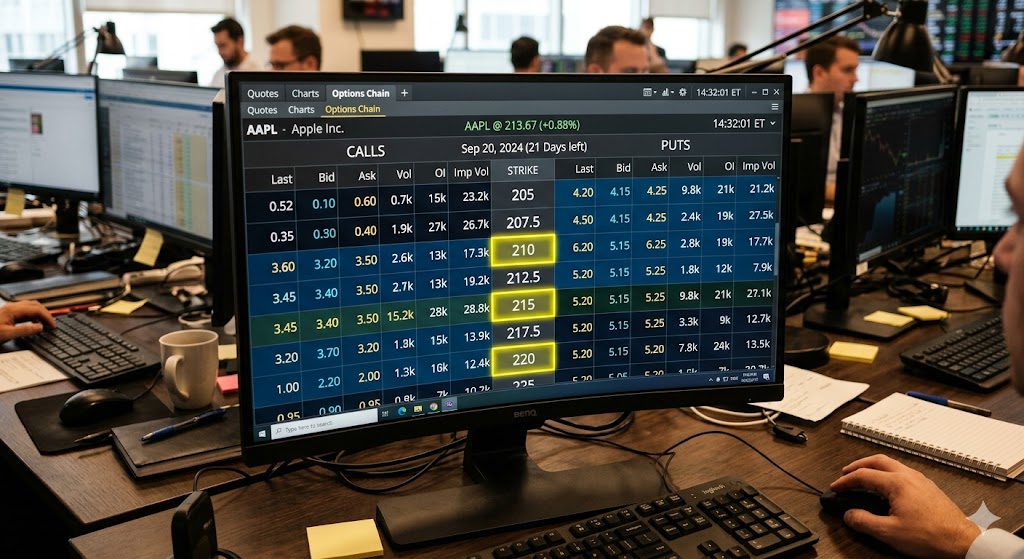
Start by observing how options prices move before trading. Watching real market behavior can help you understand pricing, timing, and volatility without immediate financial exposure.
Common Mistakes Beginners Make
- Ignoring expiration dates
- Underestimating time decay
- Buying options without understanding volatility
- Focusing only on low premiums
- Trading too frequently without a clear plan
These mistakes often come from treating options like simple stock trades rather than time-sensitive contracts.
Real-world Scenario
Imagine a company is about to release earnings. An investor expects the stock to rise and buys a call option.
If the stock increases sharply after the announcement, the option may gain value quickly.
If the stock doesn’t move as expected, the option may lose value—even if the long-term outlook remains positive.
Timing matters as much as direction.
Frequently Asked Questions
Are call options safer than stocks
They limit potential losses to the premium, but they can expire worthless, making them risky in a different way.
How much money do I need to start
You only need enough to cover the premium, which can be relatively small compared to buying shares.
Can I sell a call option before expiration
Yes, most options can be sold at any time before they expire.
What happens at expiration
If the option is not profitable, it may expire worthless. If it is profitable, it can be exercised or sold.
Do beginners use call options
Some do, but many start by learning how options behave before trading them actively.
Conclusion
Call options offer a flexible way to participate in market movements without owning the underlying stock. While the concept is simple, the mechanics—especially timing and pricing—require careful attention.
Approaching options with a clear understanding of risk, realistic expectations, and a measured strategy can help you navigate this area of investing more confidently.
Trusted U.S. Resources
https://www.investor.gov
https://www.sec.gov
https://www.finra.org
https://www.cboe.com
This article is for general informational purposes only and does not provide legal, financial, medical, or professional advice. Policies, rates, and regulations may change over time.