

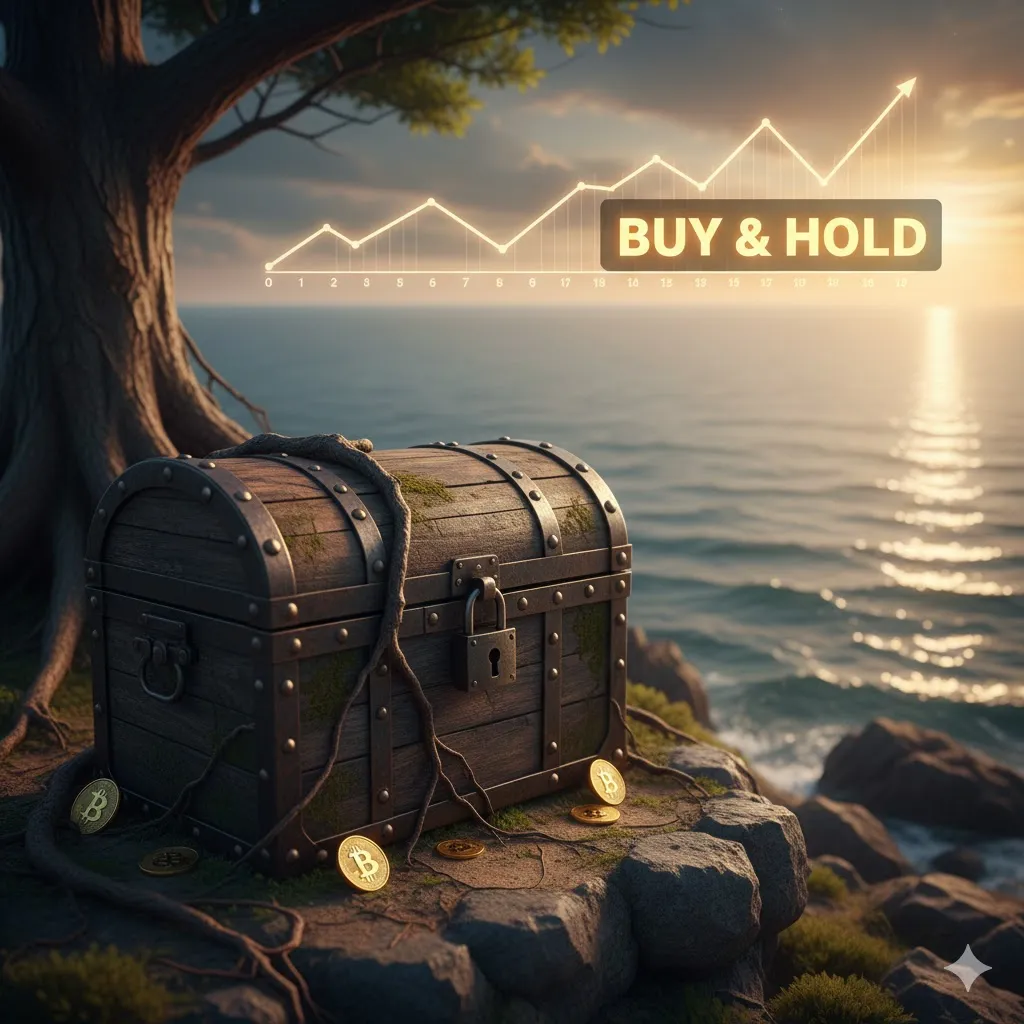
Buy and hold is one of the most talked-about strategies in investing, especially among people who prefer patience over constant trading. At its core, the idea is straightforward: purchase an asset and keep it for the long term, regardless of short-term market fluctuations.
In 2025, with markets moving faster than ever and information flowing nonstop, buy and hold remains relevant precisely because it resists noise. It focuses on time, discipline, and long-term trends rather than daily price movements.
Disclaimer: This article is for educational purposes only and does not provide financial, legal, or investment advice. Investment decisions involve risk, and individual circumstances may vary.
What buy and hold really means
Buy and hold is an investment approach where an investor purchases assets—such as stocks, ETFs, or cryptocurrencies—and keeps them for years rather than actively trading.
Instead of trying to time the market, buy-and-hold investors rely on the belief that quality assets tend to grow in value over time. Short-term volatility is viewed as a normal part of the journey, not a signal to panic.
For example, an investor who bought shares of a broad market index years ago and ignored temporary downturns may have benefited from long-term growth despite multiple market cycles.
Why buy and hold appeals to many investors
One reason buy and hold remains popular is its simplicity. There’s no need to constantly monitor charts or react to headlines.
This strategy also reduces transaction frequency, which can help minimize trading fees and emotional decision-making. Many long-term investors find that staying invested is less stressful than constantly buying and selling.
A realistic scenario: someone with a full-time job invests monthly into a diversified fund and checks their portfolio only a few times a year. Over time, consistency matters more than perfect timing.
Buy and hold vs active trading
The contrast between buy and hold and active trading becomes clearer when compared directly.
| Aspect | Buy and Hold | Active Trading |
|---|---|---|
| Time commitment | Low | High |
| Trading frequency | Minimal | Frequent |
| Emotional stress | Lower | Higher |
| Fees and costs | Typically lower | Often higher |
| Focus | Long-term growth | Short-term price moves |
Neither approach is inherently “right” or “wrong.” The difference lies in goals, temperament, and available time.
Pro Insight: Many professional portfolios combine long-term holdings with a small portion allocated to active strategies, balancing stability and flexibility.
Risks and limitations of buy and hold
While buy and hold can be effective, it’s not risk-free. Markets can experience prolonged downturns, and not all assets recover equally.
Holding a poorly chosen asset for too long may lead to missed opportunities elsewhere. Diversification and periodic review are often used to manage this risk without abandoning the core strategy.
Quick Tip: Buy and hold doesn’t mean “buy and forget.” Reviewing your portfolio periodically helps ensure it still aligns with your goals.
Buy and hold in modern markets
In 2025, buy and hold extends beyond traditional stocks. Many people apply the strategy to index funds, retirement accounts, and even digital assets, depending on their risk tolerance.
Technology has also made long-term investing more accessible, with automated contributions and fractional ownership lowering barriers to entry.
Is buy and hold right for you?
Buy and hold often suits investors who value simplicity, have a long time horizon, and prefer steady participation over frequent action. It may not appeal to those who enjoy active trading or seek short-term opportunities.
Understanding your goals, time horizon, and comfort with volatility is key before adopting any strategy.
Frequently asked questions about buy and hold
Is buy and hold suitable for beginners?
Many beginners find it approachable because it requires less frequent decision-making.
Does buy and hold work in volatile markets?
It can, but patience and diversification are important during extended downturns.
Can buy and hold apply to crypto assets?
Some investors use a buy-and-hold approach with crypto, though volatility and risk are higher.
How long is “long term” in buy and hold?
It often means several years or more, depending on individual goals.
Should buy and hold portfolios be adjusted over time?
Yes. Periodic reviews help ensure alignment with changing goals and circumstances.
Trusted U.S. sources for further reading
- U.S. Securities and Exchange Commission (SEC) – https://www.sec.gov
- Consumer Financial Protection Bureau (CFPB) – https://www.consumerfinance.gov
- Federal Reserve Education – https://www.federalreserve.gov
- FINRA Investor Education Foundation – https://www.finra.org