

Learn what after-tax returns are, why they matter more than raw gains, and how investors improve results legally.
Many investors focus on how much their portfolio grows, but what truly matters is how much they keep. After-tax returns reveal the real performance of an investment after taxes quietly take their share.
Two portfolios can post identical gains on paper, yet deliver very different outcomes once taxes enter the picture. Understanding this difference is what separates surface-level investing from long-term wealth building.
What After-Tax Returns Really Mean
After-tax returns measure investment performance after accounting for taxes on interest, dividends, and capital gains. They reflect the money that actually ends up in your pocket—not just what appears on statements.
A simple real-life scenario: one investor trades frequently, realizing short-term gains each year. Another holds similar assets long term. Even if both earn the same pre-tax return, the long-term investor often ends up ahead because fewer gains are lost to taxes along the way.
This is why after-tax returns are often a more honest metric than headline performance.

Why After-Tax Returns Matter More Than Raw Performance
Taxes interrupt compounding. Every time gains are realized and taxed, less capital remains invested to grow in the future.
Over long periods, this effect compounds dramatically. A strategy that looks slightly worse before taxes can outperform after taxes simply because it minimizes tax drag.
This is especially important for investors in higher tax brackets or those investing through taxable accounts.
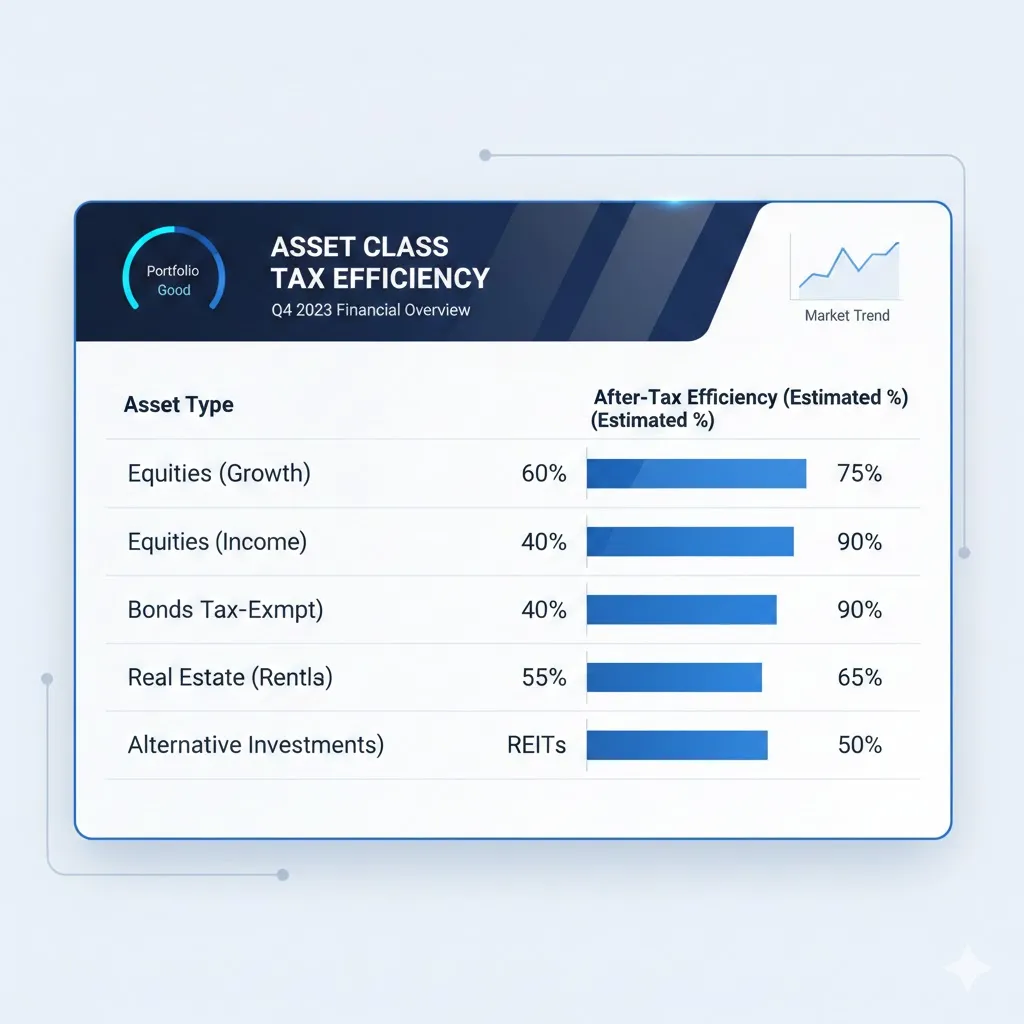
Assets and Their After-Tax Efficiency Compared
| Asset Type | Typical Tax Treatment | After-Tax Efficiency | Holding Preference |
|---|---|---|---|
| Index funds | Low turnover, capital gains | High | Long-term |
| Dividend stocks | Qualified dividends | Medium–High | Long-term |
| Bonds | Ordinary income | Low | Tax-advantaged |
| Actively managed funds | Frequent gains | Low | Tax-deferred |
| REITs | Mostly ordinary income | Low | Tax-advantaged |
This comparison shows why asset selection and placement matter as much as expected returns.
How Investors Improve After-Tax Returns
Improving after-tax returns rarely requires higher risk. It usually comes from structure and patience.
Holding investments longer can shift gains into lower tax categories. Placing tax-inefficient assets into tax-advantaged accounts reduces annual tax drag. Reducing unnecessary turnover limits how often taxes are triggered.
A real-world example: investors who rebalance thoughtfully and avoid emotional selling often outperform purely because they realize fewer taxable events.
Common Mistakes That Reduce After-Tax Performance
One major mistake is chasing short-term gains without considering tax impact. Another is placing highly tax-inefficient assets into taxable accounts, wasting valuable tax shelter space elsewhere.
Ignoring after-tax results can also lead to misleading comparisons between strategies. A higher pre-tax return does not always mean a better outcome.
Smart investing looks beyond the headline number.

Disclaimer
This article is for general informational purposes only and does not constitute tax, legal, or financial advice. Tax laws and individual circumstances vary. Consult qualified professionals for guidance specific to your situation.
Pro Insight
Over decades, reducing tax drag by even a small percentage can rival the impact of finding higher-performing investments.
Quick Tip
Before selling an investment, check whether waiting a short time could qualify gains for more favorable tax treatment.
Frequently Asked Questions
What are after-tax returns?
They are investment returns calculated after accounting for taxes owed on gains and income.
Are after-tax returns more important than pre-tax returns?
For long-term investors, yes—because they reflect real, spendable results.
Do tax-advantaged accounts affect after-tax returns?
Yes. They often improve after-tax outcomes by deferring or eliminating taxes.
Can lower returns still win after taxes?
Yes. Tax-efficient strategies can outperform higher-turnover approaches after taxes.
Should all investments be evaluated after taxes?
Ideally, yes—especially when comparing strategies or funds.
Conclusion
After-tax returns tell the truth about investing outcomes. They reward patience, efficiency, and thoughtful structure rather than constant action.
When you measure success by what you keep—not just what you earn—you align your strategy with lasting wealth instead of temporary gains.
Trusted U.S. Resources
Internal Revenue Service — Investment Income and Taxes
https://www.irs.gov
U.S. Securities and Exchange Commission — Investor Education
https://www.sec.gov
FINRA — Tax-Efficient Investing
https://www.finra.org